Table of Contents
Table of Contents
- Pros and cons of starting a snow removal business
- Pros
- Cons
- Understanding the market and fit
- Identify your target customers
- Seasonal trends and opportunities
- Choosing your services
- Core services
- Add-on services
- Startup equipment and tools
- Essentials (start lean)
- Scale-up gear (commercial/big lots)
- Maintenance plan
- Tools to manage operations efficiently
- Pricing foundations (profit and fairness)
- Understanding different pricing models
- Key factors influencing pricing
- Marketing and sales
- Build a strong online presence
- Local advertising and networking
- Client retention strategies
- Legal and safety
- Over to you!
- Frequently Asked Questions (FAQs)
- How much do I need to start a snow removal business?
- How can I attract more snow removal clients during the off-season?
- What are some common mistakes to avoid when starting a snow removal business?
IBIS shows that the snow removal industry's revenue grew at a CAGR of 4.3% between 2020 and 2025, reaching an estimated $23 billion.
This may have got you thinking about how profitable this business can be. Perhaps you did some research and skimmed a few Reddit threads where snow removal business owners shared their promising ventures.
But there’s just one problem: you don’t know where to start.
This guide breaks it all down, covering:
Pros and cons of starting a snow removal business
How to understand your target market
Specific snow-clearing services that work for a beginner
The right tools to help you get started
Marketing your new business
Permits the business might need
By the end, you will learn about the different aspects of starting a snow removal business, how to launch successfully, and set up for long-term profitability.
Pros and cons of starting a snow removal business
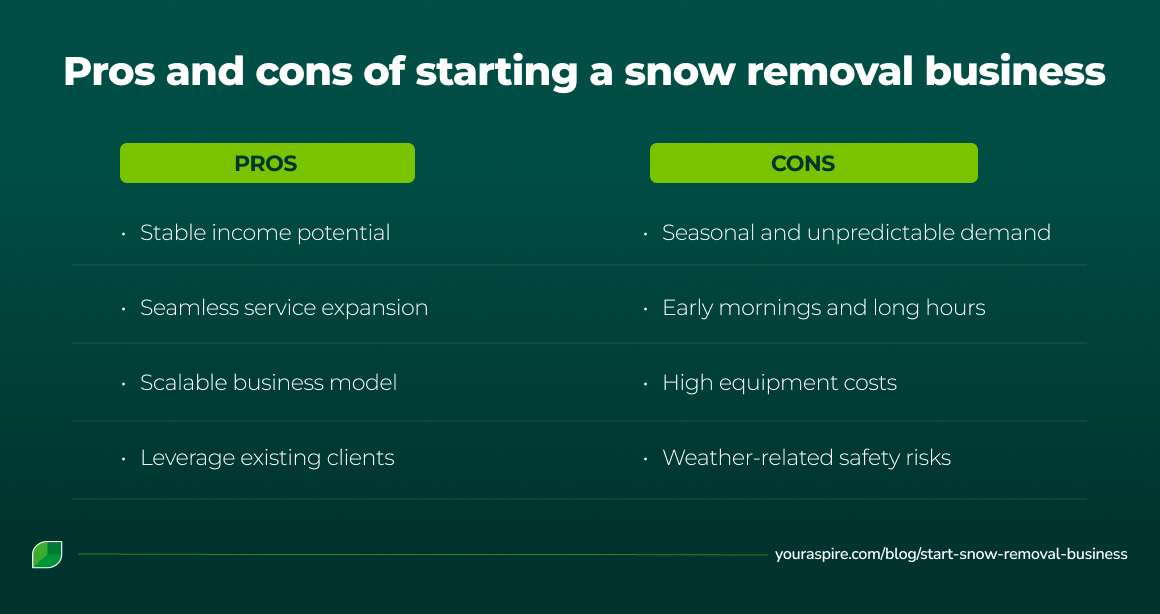
While snow removal is a smart way to generate revenue during winter, it’s very season-dependent. You’re only in business during the winter.
In this section, you’ll find the most common benefits and disadvantages of starting a snow removal business.
Pros
During the winter season, snow removal is in high demand, especially in cities with high snowfall.
Here’s what that translates to:
Stable income: If you’re able to secure seasonal contracts, you have a predictable income stream for the winter.
Seamless service expansion: Consistent revenue gives you the financial footing to grow beyond your starting client base. Once you’ve built a stable residential roster, that steady cash flow can fund the purchase of new equipment, insurance, and provide the credibility needed to pursue commercial or municipal contracts.
You have the means to bid on projects that can pay more per visit because you’ve got the foundation right.
Scalable business model: A snow removal business lets you start small with shovels, a car, and deicing, then scale up by closing the right contracts and following pricing models that reflect your effort.
Leverage your existing client base: If you already run a landscaping, cleaning, or other seasonal business, you can expand your offerings to include snow removal services for current clients.
Cons
While snow removal businesses are profitable and scalable, they’re not without their unique challenges. Here are some of them:
Unpredictable demand: This business model only works when it snows. As such, your success depends heavily on the weather, which can vary from year to year.
Early mornings and long hours: Considering snowstorms typically happen at night, there’s a good chance that you’ll have to wake up earlier to clear snow. Sometimes, you may have to remove snow during storms to prevent it from becoming compacted and too hard to shift.
Equipment costs: To be an effective snow removal contractor, you’ll need trucks, plows, and tailgate spreaders, which can be expensive for a new business. You also need to maintain them during the off-season to ensure they’re in good condition.
Weather-related safety concerns: Winter weather can put you or your crew at risk in the field. It can become too cold to work, causing you to reschedule projects and incur additional labor costs.
Understanding the market and fit
The snow removal industry has its peak months and demand patterns.
Since it’s not a typical round-the-year business, it’s important to understand the trends in your city and identify your ideal clients before you start operations.
Identify your target customers
It’s crucial for you to define who you want to serve specifically. Here are the different client segments in snow removal for you to consider:
Residential clients: If you’re on a budget and all you have is a shovel and a car, homeowners might be your best clients for a start.
Carson, a snow removal contractor, says you can start the business with just a shovel for about $20-$50. He advises new entrepreneurs to knock on doors in their neighborhood and offer to shovel driveways when it snows.
This option doesn’t cost much.
Now, if you have a truck and more manpower, you can upgrade to working with homeowners' associations or owners with multiple properties.
Commercial clients: If you have sufficient budget to purchase blowers, a truck, a plow, radios, a field service management tool like Aspire, and skid loaders, commercial clients might be better suited to your business.
You can go after small commercial properties, such as medical offices, small plazas, or strip malls, or larger ones, such as industrial warehouses, corporate offices, university campuses, high schools, hospital complexes, and major shopping malls.
Scott Maxwell, a field service management professional, recommends going after the small commercial properties for new businesses because:
They usually need reliable, timely service, but aren’t as demanding as large commercial clients.
Have reduced risk and increased route density.
They value relationships and quick communication.
Larger commercial contracts, on the other hand, often generate high revenue through seasonal contracts and increased brand awareness.
But they have strict contracts and response times, specific procedures to follow, and minimal tolerance for slip-ups.
Municipal clients: The government can also hire your snow removal business to clear snow. State departments of transportation, city public works departments, and even federal agencies can employ your services to clear snow on roads, highways, or other public facilities.
They often issue a request for proposals and award the contract to the most qualified bidder. To secure such contracts, you need to:
Demonstrate your qualifications
Have qualified crew members and the necessary equipment
Be bonded or insured
Have the right licenses and permits
Seasonal trends and opportunities
Beyond defining your ideal client, research the frequency of snowfall in your city.
Find out how many months in winter there’s actual snowfall and storms on average. How many inches of snow do you typically have throughout the season and after each fall?
For instance, if your city typically has one month of active snowing, you can decide to rent tools and hire seasonal workers to reduce labor/overhead costs and increase your profit margin.
You can also boost revenue by including additional services in your offer, such as salting, sand application, or roof snow removal.
Choosing your services
Snow removal is a broad term that encompasses various services related to snow. Clearing is the general idea, but you can also include additional services in your offering.
As a new business, selecting the right set of services helps you with brand positioning so prospects know what to contact you for.
Here are key service options in snow removal to choose from:
Core services
For your main service, choose a combination of the options below, one or two at most, depending on your available equipment and starting budget:
Snow plowing: This involves clearing large areas of snow (parking lots, roads, or driveways) using plow-equipped vehicles or skid loaders. It’s an efficient way to push snow to the sides or to designated spots in big spaces.
Snow shoveling: Here, you’re using shovels or blowers to manually remove snow from tight spaces like steps, entryways, or sidewalks—essentially, spaces where trucks or plows can’t reach. It’s time-consuming and better for small areas.
Ice management: This service focuses on preventing and removing ice buildup. It includes salting, deicing, and applying sand after snow events. Ice management is about making it safe for people to walk or drive after a snow event.
Add-on services
In addition to your core snow removal services, include supplementary services to increase revenue and position the business as experienced and professional to prospects.
Here are some add-on services to include:
Snow hauling: Involves removing snow from the site. It can be a supplementary service to snow plowing for commercial clients.
Roof snow removal: You can include this in a residential client’s snow shoveling offer. This can help them prevent structural damage such as sagging or collapse, ice-dam water damage, and injury from falling snow.
Sidewalk clearing: This can be offered to both residential and commercial clients. It’s using shovels or blowers for detailed snow clearing on sidewalks, making it safe to walk.
Salting/deicing: While this is part of ice management, you can offer it as an add-on service to residential and commercial clients. It’s applying salt or liquid brine to melt ice and prevent snow from bonding to the surface.
Startup equipment and tools
The good news with snow removal services is that you don’t need a huge budget to get started with the right tools. In fact, you may already have what it takes to begin operations.
To help guide your planning, this section will cover essential equipment required for snow clearing, whether you have money to spend or not.
Essentials (start lean)
If you have a lean budget, you can make do with the following tools:
Ergonomic shovel: Curved handle designed to reduce back strain, considering you could be clearing snow for hours. You can also go for standard shovels.
Ice-scraper or ice-chopper: A metal blade to break up ice.
Snow broom: To brush snow off cars or surfaces.
You can also get specialized tools to help you work more quickly.
Roof rake: A long-handled tool for removing snow from roofs.
Snow blowers: A hand-held power tool used for forcefully removing snow and throwing it through a chute. It helps you clear snow faster and is less stressful than a shovel.
Ice melt spreaders: Help you distribute ice melt, sand, or rock salt evenly and efficiently to break down ice on sidewalks and driveways.
Scale-up gear (commercial/big lots)
When it’s time to scale and take on commercial or government projects, you can introduce advanced equipment to handle bigger and more complex snow removal tasks.
Experienced field service professional Scott Maxwell recommends buying:
A reliable ¾-ton pickup truck
A straight-blade plow
A tailgate salt spreader
He explains that this setup provides the flexibility to handle both plowing and salting small to midsize commercial lots or driveways.
You can also add:
Skid steers and loaders: Maneuverable machines for clearing snow in tight spaces.
Dump trucks: Used to haul snow off-site.
Backhoes: To load snow into dump trucks.
Wing and V-plows: Adjustable-angle blade plows and wings to extend the plow’s width.
Generators and lighting rigs: To supply power and light on-site for night work.
Maintenance plan
An important side to the equipment conversation is maintaining your tools to reduce downtime and prevent costly repairs:
Pre-season: Before winter begins, you need to inspect and ensure all your equipment is in order.
Sharpen your blades, lubricate chains and moving parts, check mounting hardware and bolts, inspect batteries, change oil and filters, inspect tire treads, test the equipment, and organize it for easy access.
Post-use cleaning: After each project, wash your truck, plow, and spreader to remove salt and other residue. Check for loose parts or damage to your equipment, refuel your vehicle and blower, grease all fittings, and check fluid levels for oil, hydraulic fluid, and coolant.
Routine inspections: At different intervals throughout the season, check your equipment for damage, battery condition, and terminal condition; assess your parts inventory and order replacements; inspect hydraulic systems for leaks; and check for loose parts from plowing.
Tools to manage operations efficiently
In addition to snow-clearing equipment, you need a management app like Aspire to streamline operations, reduce repetitive administrative tasks, and cut overhead costs.
Here’s how Aspire helps with that:
Real-time scheduling: Aspire lets you plan projects the moment they’re won. Thanks to its easy-to-navigate calendar view, you’re not double-booking or overcrowding your projects.
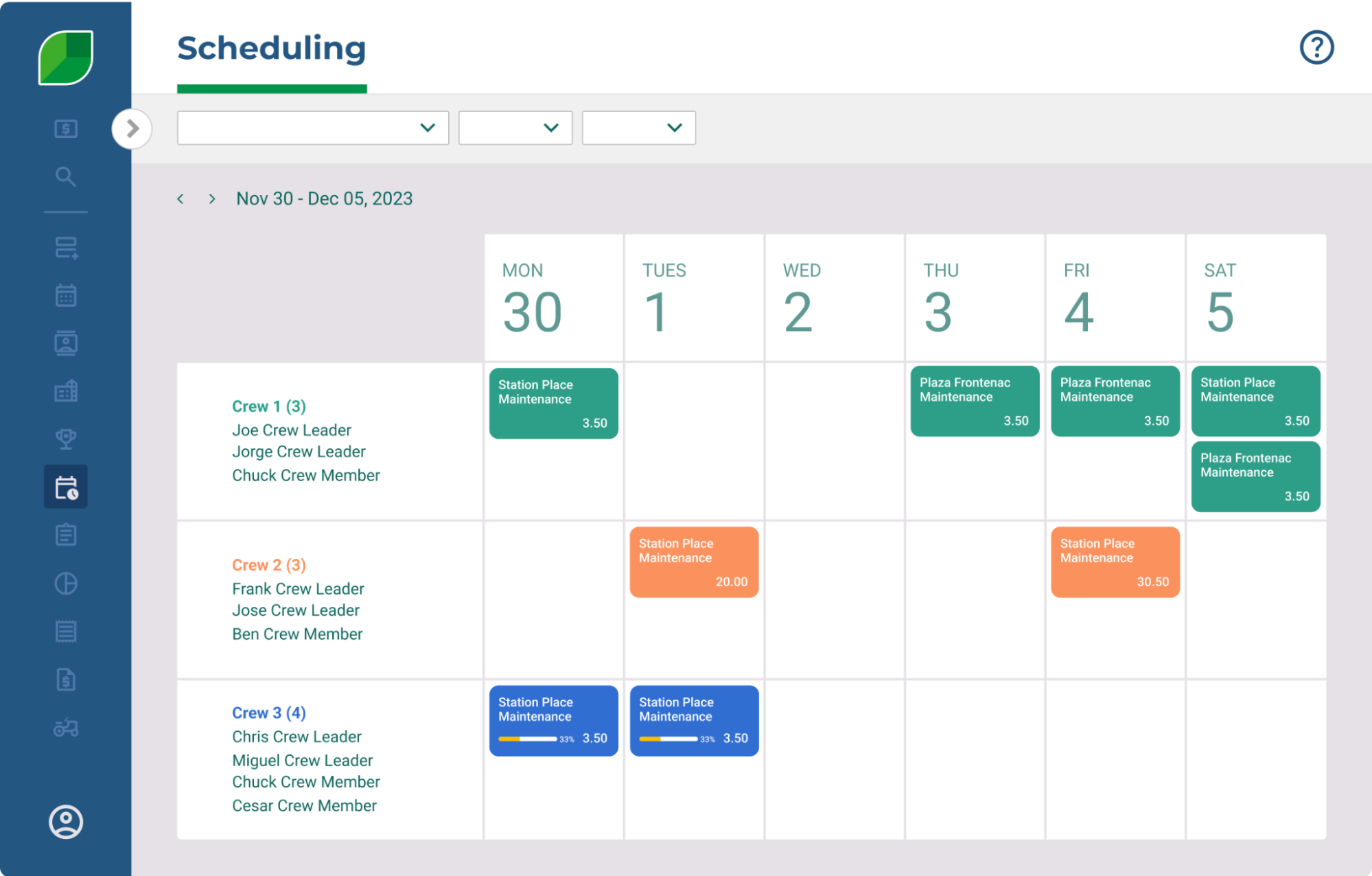
Each project is automatically loaded with sufficient information about the client, property, address, and specific requests, ensuring your team knows what to do at all times.
Estimating templates: To bid on certain snow removal projects (residential, commercial, or government) you will need to create estimates that outline how much you'll charge to clear snow from a property based on factors such as property size, service type (per-visit or seasonal), and service frequency.
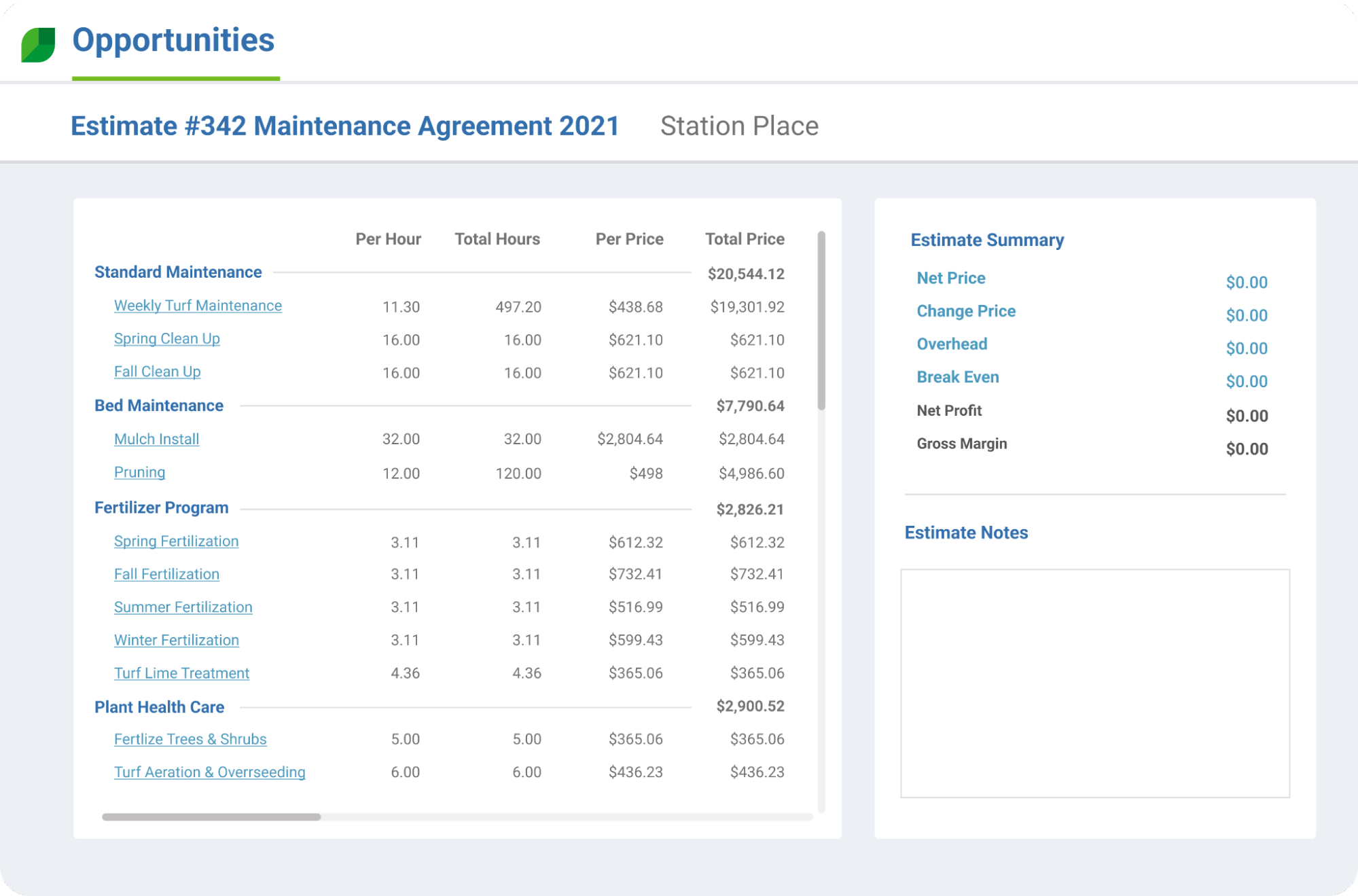
Aspire provides customizable templates to simplify the process of creating an estimate.
You add the items and their prices from your existing catalog to create the estimate. Business details are pre-loaded, minimizing manual inputs and errors.
Invoicing assistant: Generate and send invoices easily with Aspire. With details of the project already existing within the system, you can create an invoice in just a few clicks.
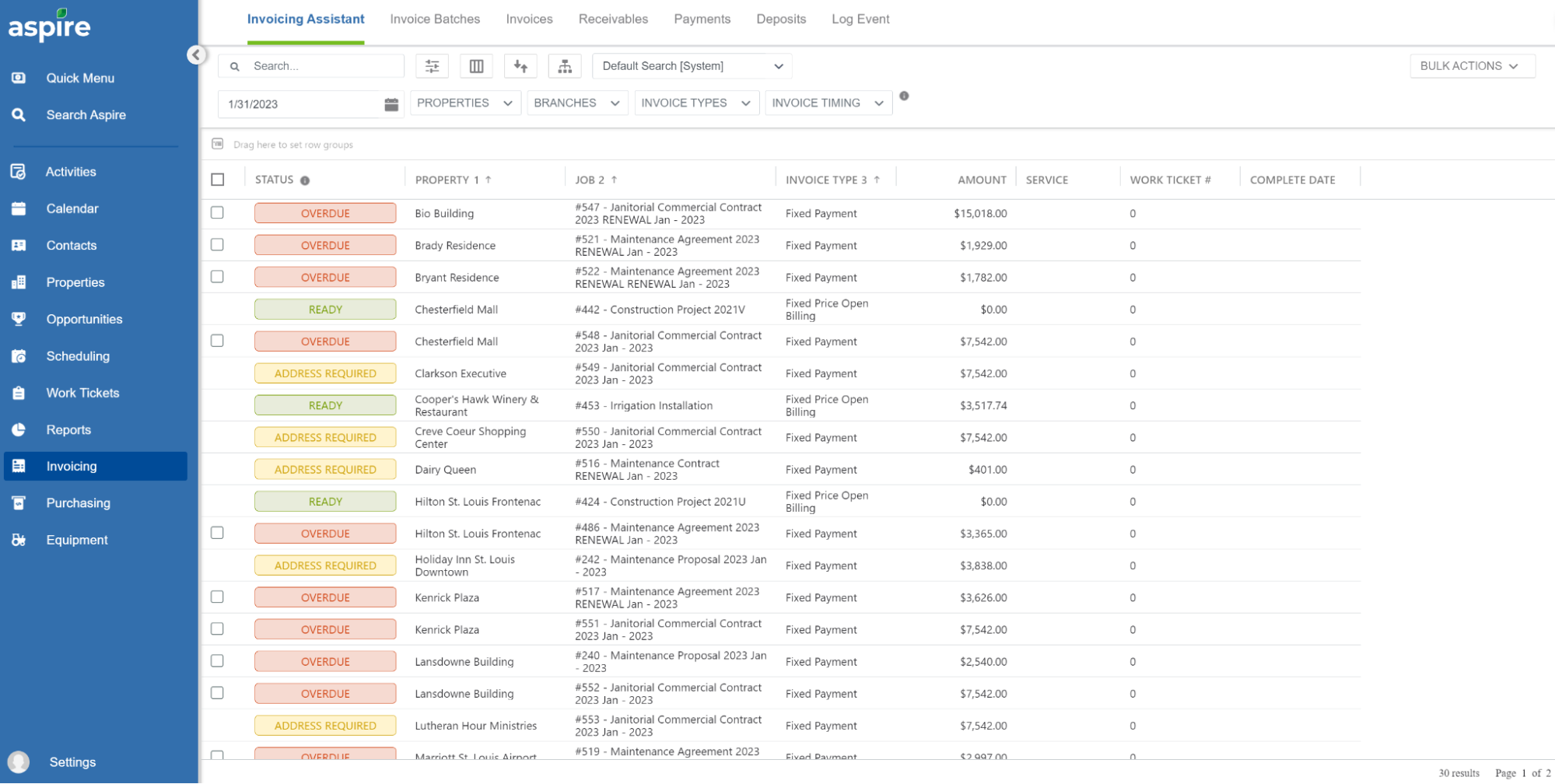
Plus, Aspire lets you track the status of each invoice. You can monitor paid, outstanding, or overdue invoices, making it easy to follow up with clients.
Pricing foundations (profit and fairness)
Figuring out how much to charge can be tricky for both newcomers and existing business owners.
Do you charge clients by the hour or per project? How do you determine the right price?
Here, you will learn about the different pricing models used by snow removal contractors and the factors that affect pricing.
Understanding different pricing models
The most common models contractors use include:
Per-event pricing: This option means you charge clients after a snowfall event or snow accumulation within a defined period. It’s ideal for regions with inconsistent snowfall.
According to HomeAdvisor, the average rate for per-event pricing is $30-$100. To be on the safe side, research what your competitors charge, then factor in the hours to be spent, material cost, number of crew members required, overhead, and your profit margin.
Seasonal contracts: Clients pay a flat fee for the entire winter season. It’s a popular model in high snowfall regions. HomeAdvisor places the average cost of seasonal contracts at $200-$700, but this can change depending on what you choose to include in the package.
To ensure your seasonal contracts are profitable, check the average snowfall in your region and use that to guide pricing.
For instance, if your area gets around 60 snowfall events per year, not all of them will require plowing. If your trigger depth is 3 inches, only a portion of those events will qualify.
A more realistic estimate is that roughly one-third of snowfall events exceed this threshold, meaning you might expect around 20 plowable events per season.
Use local historical data where possible to refine this estimate.
Next, calculate your one-time cost:
Total cost = (Labor + Materials + Overhead) × (1 + Profit %)
Labor cost = Hourly rate × # workers × # hours =
$25 × 3 × 3 = $225Material cost = Cost per unit × Amount used =
$0.20/lb. × 60 lb. = $12Overhead % = (Monthly overhead ÷ Monthly sales) × 100 =
($3,000 ÷ $12,000) × 100 = 25%Overhead cost = (Labor + materials) x overhead % = ($225 + $12) × 25% = $59.25
One-time total: ($225 + $12 + $59.25) × 1.30 = $385.13
Per-season price: $385.13 × 20 events = $7,703
Per-inch pricing: In areas with significantly higher snowfall and large accumulations, per-inch pricing makes sense, as it covers your time and effort.
Here, you charge a flat fee for the first one to six inches of snow and a fixed amount for each additional inch, or you can switch to hourly rates.
This can be $10–$25 for the first 6 inches, and $4–$9 for each additional inch, according to FieldCamp.
Hourly pricing: This is one of the simplest ways to price snow removal services. It’s a good model to use when dealing with:
Unpredictable weather
New clients or properties where clearing times are still unknown
Properties with unique layouts, difficult accessibility, or several obstacles
Detailed snow removal work
Here, you multiply the hourly rate by the hours required for the job, add overhead costs and materials, and multiply by the profit margin.
((Hourly rate × # workers × # hours) + overhead + materials) x (1 + profit %)
Key factors influencing pricing
When quoting for snow removal projects, it helps to understand the factors that affect pricing so you can consistently maintain profitability and charge accurately.
Here are some of them:
Equipment and labor costs: Snow removal jobs often dictate your equipment combination. Sometimes, a shovel and a couple of workers might cut it. At other times, you may need a truck, a plow, or a blower.
Property size and complexity: Sites that are hard to access or have several obstacles are challenging to clear of snow. You may end up spending more time on such properties than on those with straight, open paths.
Snow depth and weather conditions: More inches of snow often mean more effort and clearing time. If the snow is wet and heavy, you also need additional time.
Plus, your equipment could take a hit in such conditions. And if it ever gets windy during snow clearing, your safety is at risk.
Response rate: Timing is a big deal with snow removal services. If you have clients who are comfortable with standard service, normal base rates (the next day after snowfall) apply.
But clients who want priority or emergency services need to pay premium rates, as it means you have to respond immediately or within six hours.
Marketing and sales
Considering snow clearing is something most people need in winter, you can decide to start the old-school way and go door-to-door. Speak with your neighbors and local businesses to attract new clients.
You can also leverage the ideas below to build awareness and generate leads.
Build a strong online presence
Create a Google Business Profile (GBP): Include your correct address, contact, and project photos, if you have any. This way, when people search for your business on Google, it’s the first thing they see on the results page.
Open a social media profile: Facebook, Instagram, or LinkedIn might be a good start. Create a social media calendar to help structure your content and ensure consistent posting.
You can post tips on how to prepare for winter, debunk myths about snow clearing, recommend the best tools to use for snow removal, showcase DIY snow-clearing projects that went wrong, and provide tips for folks interested in clearing snow themselves.
Create a website: On your website, people can find detailed information about your business and services.
It can also serve as an educational hub for learning about snow management. Work with SEO professionals and digital marketers to ensure the website is optimized for different devices and has the right keywords to help you drive traffic.
Run digital advertising campaigns: You can run Google, Facebook, and LinkedIn ads to place the business in front of people who most likely need it.
Local advertising and networking
You’d be surprised how much impact local marketing strategies can have. Even a simple discussion with people in the community before the season starts can go a long way.
Here are other strategies you can try:
Flyers and direct mail: Create business fliers and post them on community boards at the local grocery shops, libraries, coffee shops, and parks. Include a rough estimate, terms and conditions, contact info, and services offered.
Yard signs and vehicle branding: Place a sign in your customers’ yards (with their permission, of course) and your contact information when winter is around the corner.
Networking: Attend homeowner’s association and business association gatherings and local town hall meetings. Connect with people of influence who can introduce you to high-value clients.
You can also partner with other field service businesses like roofers, pool builders, or concrete companies. They may refer clients and collaborate with you on projects.
Client retention strategies
After securing clients, you need a plan to retain them once winter ends. To do that, try the following strategies:
Deliver consistently good results: Be on time and ensure your team does a great job every time. In addition, communicate proactively with clients. Think your schedule will change? Inform them ahead of time. Send emails or texts with weather updates. Check in with them even after the service has ended. This builds trust and shows you’re reliable.
Offer multi-year seasonal contracts: Instead of a season-long contract, extend it to two and lock in your revenue for two years. You can give a discount, e.g., 10% off, to people who take the deal.
Add value: Offer discounted or free add-on services to loyal clients. This can be in the form of prioritizing their service after a snowstorm or offering free driveway salting.
Stay connected: Maintain contact with clients off-season. Send an end-of-season thank you gift. If you offer services other than snow removal, don’t hesitate to offer them.
Legal and safety
Licensing requirements vary by location, so contact your city clerk's office to confirm what’s needed to operate legally.
Here’s a checklist to follow regarding your legal and safety responsibilities:
Employee safety training: Organize classes to teach employees how to operate snow-clearing equipment, such as plows and loaders. You need to show them how to attach plows to trucks, proper lifting techniques to avoid injury, safe driving tips during harsh winters, fatigue management on long shifts, and how to navigate cold-weather hazards (e.g., frostbite or hypothermia).
Confirm state and local requirements: Will you need a general business license or specialized permits for snow removal? Are there environmental regulations to comply with, and do you require government consents to work on certain public areas? Check what you might need from the state and city governments for your new venture.
Secure vehicle and equipment permits: Register your vehicle with the government, since it will be used for business purposes. If you will be operating equipment on a public road, confirm whether a permit is required.
Register your business: If you’re just starting a new business, file it as a sole proprietorship, LLC, or corporation with the state. If you have an existing business, check with the state government office on how to expand your services under the same registration.
Insure the company: Lastly, you need to get insurance for the business. Paying out of pocket for incidents will drastically reduce your profit or put you in debt. Stay protected by getting general liability, workers’ compensation, and equipment insurance.
Over to you!
There you have it—a detailed guide on how to start a successful snow removal business.
You will also need a tool like Aspire to help automate and streamline operations as you scale. It will help you manage administrative and operational tasks so you can focus on clients and implement new lead-generation strategies.
Schedule a demo to see how beneficial Aspire can be for your snow-clearing business.
Frequently Asked Questions (FAQs)
How much do I need to start a snow removal business?
If you intend to run the business alone or focus on residential clients, estimate between $1,000 and $15,000 for your startup costs. This should cover insurance, advertising, licensing, business registration, hand tools, and small-powered equipment.
But to target a commercial client base or operate multiple vehicles simultaneously, you can expect to spend $25,000 to $50,000, or more. At that range, you can purchase trucks, plow attachments, insurance, shovels, blowers, and run advertising campaigns.
How can I attract more snow removal clients during the off-season?
The off-season is a good time to market discount offers or bundled services to prospects and existing clients. You want to share winter prep tips on social media and keep your business top-of-mind through email updates.
Partner with landscaping clients year-round and run digital ad campaigns before the snow season hits.
What are some common mistakes to avoid when starting a snow removal business?
Skipping insurance, underpricing jobs, and failing to plan for equipment maintenance are major pitfalls. Others include ignoring contracts, lacking backup plans for extreme weather, and failing to market early enough to secure clients before the first snowfall.






 866-727-7473
 Schedule Demo
 390 S Woods Mill Rd #300 Chesterfield, MO 63017


