Table of Contents
Table of Contents
- Category #1: Technical skills questions
- Category #2: Experience and qualifications questions
- Category #3: Problem-solving and creativity questions
- Category #4: Client interaction and communication questions
- Category #5: Work habits and reliability questions
- Category #6: Safety and equipment questions
- Category #7: Field communication and documentation questions
- What are the best practices for interviewing landscaping employees?
- Grow your landscaping business
Landscaping businesses provide services from lawn mowing and mulching to lawn treatment and landscape design to maintain residential and commercial properties.
Landscapers need employees who can provide quality work and deliver top-notch customer service. However, vetting and hiring potential candidates can be challenging.
This article describes the best questions to ask during a job interview, with specific examples and sample answers to help you hire the right team members and grow your landscaping business.
Category #1: Technical skills questions
When asking technical skill questions, you must evaluate job candidates’ existing training and knowledge to ensure they can perform the job effectively.
The required technical skill level varies based on the services you provide.
1. Share a project where you had to balance aesthetics and functionality in hardscaping design. How did you achieve this balance?
Why you should ask this question: The question is important if your company performs hardscaping services. Adding hardscaping, such as a paver patio or flagstone walkway, is an expensive job that can’t be easily corrected if techs make mistakes during the installation.
This question ensures the job candidate understands more than physical labor; it also highlights the importance of incorporating design and aesthetics into outdoor spaces.
Example of a good answer: “I was once hired to install a paver patio with a built-in fireplace. The homeowner asked me for advice on where to place the fire pit in the patio design. After considering several factors like the placement of patio furniture and grills, not to mention ensuring the homeowner could utilize the remaining space effectively, I settled on a location that the homeowner was pleased with.”
2. Have you ever had to troubleshoot and repair irrigation systems on the job? Describe your process in such situations.
Why you should ask this question: To troubleshoot a malfunctioning irrigation system, technicians need to assess the situation and identify the specific problem areas, such as:
Clogged nozzles
Broken pipes
Malfunctioning valves
Issues with the controller
The initial assessment lays the groundwork for repairing the irrigation system. More importantly, it shows the job candidate understands how to approach a problem and use logic to identify a solution.
Example of a good answer: “To begin, I would ensure the irrigation system is connected to the water supply. Then, I would walk through the steps I learned in my training, such as conducting pressure tests, checking for leaks, and inspecting the system’s components.”
3. Share your experience selecting and planting native or drought-resistant plants to create sustainable landscapes.
Why you should ask this question: Successful landscaping requires planting the right plant in the right spot. Landscapers are frequently asked to pick the ideal plants for a customer’s property, so landscaping employees need to be able to choose plants based on climate and location, as well as species native to the area.
Example of a good answer: “When I’m asked to choose the right plants for a property, I typically consult the USDA Plant Hardiness Zone Map and also check with the local university extension to ensure plants are native to the area.”
4. Explain your approach to managing soil erosion and runoff issues on landscaping projects.
Why you should ask this question: Protecting waterways and preventing erosion are critical components of landscaping. Landscaping companies often apply fertilizers and pesticides that can harm the environment if they flow into rivers, lakes, and streams.
Example of a good answer: “I would first assess the property to identify areas prone to erosion and runoff. This includes analyzing the slope, soil type, vegetation cover, and existing drainage patterns. If necessary, I would suggest planting vegetation such as grass, shrubs, and trees to reduce soil erosion. I would only apply a chemical treatment if absolutely necessary, opting for natural remedies if possible.”
Category #2: Experience and qualifications questions
Required experience shifts based on role. A landscape architect typically needs a design degree, while a lawn care technician often builds skill through on-the-job training.
The following questions and answers will help you evaluate a job candidate’s experience.
5. In your landscaping career, what have you found to be the most significant challenges in project management, and how did you address them?
Why you should ask this question: Hiring managers often ask questions about solving problems to assess the candidate’s ability to use critical thinking skills to overcome obstacles. It also shows how candidates approach problem-solving and their ability to manage projects effectively.
Example of a good answer: “As a lawn crew manager, I’ve found it challenging to get all of my techs to accurately track their hours as they work on several properties on a given day. I implemented a process in our field management software that requires each tech to record their hours before moving on to the next job site.”
6. What certifications or training have you pursued to enhance your landscaping skills and knowledge?
Why you should ask this question: Depending on the type of work, new hires may need special certifications, especially if applying chemicals or driving heavy machinery like tractors. For training, pay attention to how they answer the questions, making sure to look for specific examples.
Example of a good answer: “I received my Certified Fertilizer Applicator license in 2019, which allows me to transport and apply commercial-grade fertilizers. It also permits me to supervise lawn technicians who apply fertilizers.”
7. Have you ever had to coordinate subcontractors or collaborate with other trades on a project? How did you ensure seamless teamwork?
Why you should ask this question: This is an important question to ask if you’re hiring for a project manager or other type of leadership position. Landscapers frequently hire and work with other trades for complicated and involved jobs. Qualified candidates should be able to explain their process clearly.
Example of a good answer: “I frequently coordinated subcontractors in my previous role. I found it most beneficial to hold a daily meeting each morning before anybody began work, where I’d talk about the work for the day and ask each subcontractor to provide an update and mention if they had any setbacks or blockers.”
8. Can you share any experiences where you've managed budgets and resources effectively on landscaping projects?
Why you should ask this question: To turn a profit in the landscape industry, businesses need to ensure employees effectively manage resources and keep track of purchases so actual job costs don’t surpass estimates. Candidates should be able to clearly explain to potential employers how they successfully managed project budgets.
Example of a good answer: “Whenever I manage a project, I start by developing a detailed budget plan that outlines the estimated costs for materials, labor, equipment, and any additional expenses. I consider factors such as market prices, seasonal fluctuations, and any potential unforeseen costs to ensure a realistic and accurate budget allocation.”
Category #3: Problem-solving and creativity questions
Employers ask these questions in job interviews to assess a candidate's ability to think critically, handle complex situations, and apply innovative solutions to landscaping challenges.
9. How do you integrate sustainable and environmentally friendly practices into your landscaping work?
Why you should ask this question: Homeowners increasingly prefer eco-friendly lawn care and landscaping services. Asking this question allows the candidate to demonstrate they understand the importance of providing environmentally friendly services and how to apply them in their daily work.
Example of a good answer: “I always speak to the customer upfront to fully understand their preferences for eco-friendly services. Then, I explain the options, specifically mentioning how they address sustainability. After we agree on the approach, I’ll integrate these practices into the job.”
10. Describe a situation where you had to troubleshoot unexpected challenges during a landscaping project, such as a sudden equipment breakdown or weather-related issues.
Why you should ask this question: Successful landscapers must make snap decisions at a moment’s notice, often due to severe weather, broken mowers, and other unexpected problems. The wrong decision can lead to lost revenue and unhappy customers.
Example of a good answer: “I fully understand how faulty equipment can cause a project to come to a halt. In my previous job, there were instances where we had to stop for the day simply because our mowers would stop working. Over time, I learned how to troubleshoot common problems, such as a clogged carburetor or faulty spark plug. Now, when a mower fails, I perform a set of diagnostic tests and also carry spare parts in my van to ensure a speedy repair.”
11. Share a project where you introduced new, creative elements to the landscaping design to enhance its overall appeal.
Why you should ask this question: Customers frequently ask landscapers for suggestions to enhance the look and feel of their outdoor spaces. A technician or horticulturist with a creative vision and a knack for unique ideas can help your company stand out from the competition. It also previews the candidate’s work ethic and ability to go above and beyond.
Example of a good answer: “One of my regular customers came to me and said his yard looked drab and needed a makeover. He likes to cook, so I suggested we build a chef’s garden in this perfect spot right next to his front porch. I planted common kitchen staples like lettuce, beans, herbs, and peppers. He later told me he loves how the garden refreshes the look of his yard, and he now picks fresh vegetables when he cooks.”
Category #4: Client interaction and communication questions
Scaling a landscaping business depends on repeat customers, and repeat customers depend on employees who communicate well.
These questions assess interpersonal skills and reveal how candidates handle both routine updates and difficult conversations.
12. How do you gather feedback from clients, and how have you used this feedback to improve future projects?
Why you should ask this question: Feedback helps businesses understand if customers are happy with their services, identify areas for improvement, and decide which services to provide. Collecting regular feedback also helps companies to grow their reputations and acquire even more customers.
Example of a good answer: “My previous employer used landscape business management software that automated review collection, which made it easy for the customer to leave a review. As our Google reviews climbed, we started getting more business.
13. Share a memorable experience of effectively managing a client's expectations during a landscaping project.
Why you should ask this question: Overpromising or embellishing what you can accomplish in a landscaping project will lead to unhappy customers and lost revenue. Setting clear expectations and providing regular communication helps the customer understand what to expect and minimizes surprises.
Example of a good answer: “No matter the job, I always speak to the customer before leaving for the day. I explain if the project is on schedule, mention any hiccups, and talk about what comes next. I’ve found this clears up any misunderstandings, and customers appreciate the updates.”
14. Can you share a specific example where you had to deliver difficult or disappointing news to a client regarding a landscaping project?
Why you should ask this question: Every landscaping business, at some point, ends up in a situation where they have to deliver bad news to the customer. It may be due to bad weather or a technician's mistake. The way you handle the problem and how you communicate the solution can make or break the experience.
Example of a good answer: “After we developed a design, selected materials, and discussed timelines for a patio installation job, the local utility regulatory commission assessed the area. Water lines went through the spot, and there was no way to install the patio safely. The customer was unhappy. After I explained the reasoning and how he could face a penalty, he understood and hired me for a different landscaping project.”
Category #5: Work habits and reliability questions
Landscaping crews cover multiple properties in a single day, and one late start or missed stop throws off an entire route.
These questions gauge whether a candidate shows up prepared, manages time under pressure well, and protects work quality when schedules slip.
Reliable, punctual crews are also easier to retain long-term with the right employee incentive programs in place.
15. Walk me through how you prepare for a workday with several properties or job sites on the schedule.
Why you should ask this question: Multi-stop days demand planning before the truck ever leaves the lot. This question reveals whether a candidate thinks ahead about equipment, materials, and route order, or shows up and figures it out as they go.
Example of a good answer: "The night before, I check the route order and confirm which equipment and materials each stop needs, so I'm not backtracking to the shop mid-morning. I load the trailer in reverse order of the route, which keeps the first job's gear accessible without digging through everything else."
16. Tell me about a time your crew was falling behind schedule. How did you respond without sacrificing work quality?
Why you should ask this question: Falling behind happens on nearly every route eventually, whether because of the weather, equipment trouble, or a bigger-than-expected job. This question shows whether a candidate cuts corners under pressure or finds a smarter way to catch up.
Example of a good answer: "When a mulch job ran long because of a wetter-than-expected bed, I called ahead to the next two stops to give an honest, updated arrival window instead of rushing the work in front of me. Clients appreciated the heads-up."
Category #6: Safety and equipment questions
Landscaping work involves chemicals, noise, heavy machinery, and unpredictable weather, all of which create real injury risk on a daily basis.
Use these questions to confirm whether a candidate treats safety as a habit, not an afterthought, and knows how to handle unfamiliar equipment responsibly.
17. Tell me about a time you noticed a safety hazard on a job site. What did you do before work continued?
Why you should ask this question: A hazard left unaddressed puts the whole crew at risk, and hesitation to speak up costs more than a short delay ever would. This question shows whether a candidate takes ownership of safety instead of assuming it's someone else's job.
Example of a good answer: "I spotted a downed power line tangled in a hedge we were about to trim. I stopped the crew immediately, kept everyone clear of the area, and called the utility company to resolve the issue before anyone touched the equipment again."
18. Before using a mower, trimmer, skid steer, or other unfamiliar equipment, what steps do you take?
Why you should ask this question: Injury rates spike when workers operate machinery they haven't been properly trained on. This question separates candidates who ask questions and read manuals from candidates who assume they'll figure it out on the fly.
Example of a good answer: "I ask a trained coworker or supervisor to walk me through the controls and safety features first, and I read the operator's manual if one's available. I also do a quick pre-use check — tires, blades, and fluid levels — before starting the engine, since a five-minute check beats an afternoon in the ER."
Category #7: Field communication and documentation questions
Crews in the field often work with limited direct supervision, so clear documentation and communication keep a job on track and protect the business if a dispute ever comes up.
Incorporate these questions to test whether a candidate follows through on the administrative side of the job, not just the physical labor.
19. You arrive at a property, and the site conditions do not match the work order. What do you do before beginning the job?
Why you should ask this question: Starting work on a mismatched site risks doing the wrong job entirely or missing a hazard the work order never mentioned. A reliable candidate pauses and confirms before diving in.
Example of a good answer: "I take photos of the site conditions and call my supervisor or the office before starting anything. It's a two-minute call that saves hours of redoing work or explaining to a client why the wrong area got serviced."
20. What information should a crew member record before leaving a completed job site?
Why you should ask this question: Clean documentation protects the business from disputes and gives the office an accurate record for billing and future visits. A candidate who understands what to capture reduces friction down the line.
Example of a good answer: "Before I leave, I note the work completed and any issues I noticed, like a dying tree or a broken sprinkler head, and I take before-and-after photos. That way the office has proof of the work, and the next tech who visits knows exactly what to expect."
What are the best practices for interviewing landscaping employees?
Great questions only work inside a consistent, well-run process. Keep these best practices in mind when building out a landscaping interview:
Tailor questions to the role. A crew leader interview should be weighted differently than an entry-level laborer interview, since the two roles demand different depths of experience.
Ask for specific examples. Vague answers hide gaps in experience, so push candidates to describe an actual project, client, or challenge rather than a general philosophy.
Assess practical job knowledge. Confirm that candidates understand the tools, techniques, and terminology relevant to the specific services the business offers.
Evaluate reliability and work habits. Punctuality, route preparation, and follow-through matter as much as technical skill, especially for crews juggling multiple properties a day.
Discuss safety directly. Ask about specific hazards and protocols instead of a single generic "do you follow safety rules" question.
Test problem-solving skills. Scenario-based questions reveal how a candidate reacts under real pressure, not just how they describe themselves.
Look for clear communication. Strong communicators reduce client complaints and keep the office informed, which matters more as a company scales.
Use consistent evaluation criteria. A structured scorecard keeps hiring decisions fair and defensible, and it makes comparing candidates far easier.
Avoid irrelevant or discriminatory questions. Keep every question tied to job performance, and steer clear of anything touching age, family status, or other protected categories.
Explain the job accurately. Set realistic expectations about schedule, physical demands, and seasonal fluctuations upfront to reduce early turnover.
Landscaping companies serious about reducing employee turnover should also build out a plan for what happens after the offer letter goes out. All this can start with a strong onboarding process.
Grow your landscaping business
A structured interview process solves the front end of the hiring problem, but the real payoff comes once the new hire starts work.
Getting a new employee onto a route quickly, tracking productivity from day one, and giving them the tools to succeed determine whether that hire becomes a long-term asset or another turnover statistic.
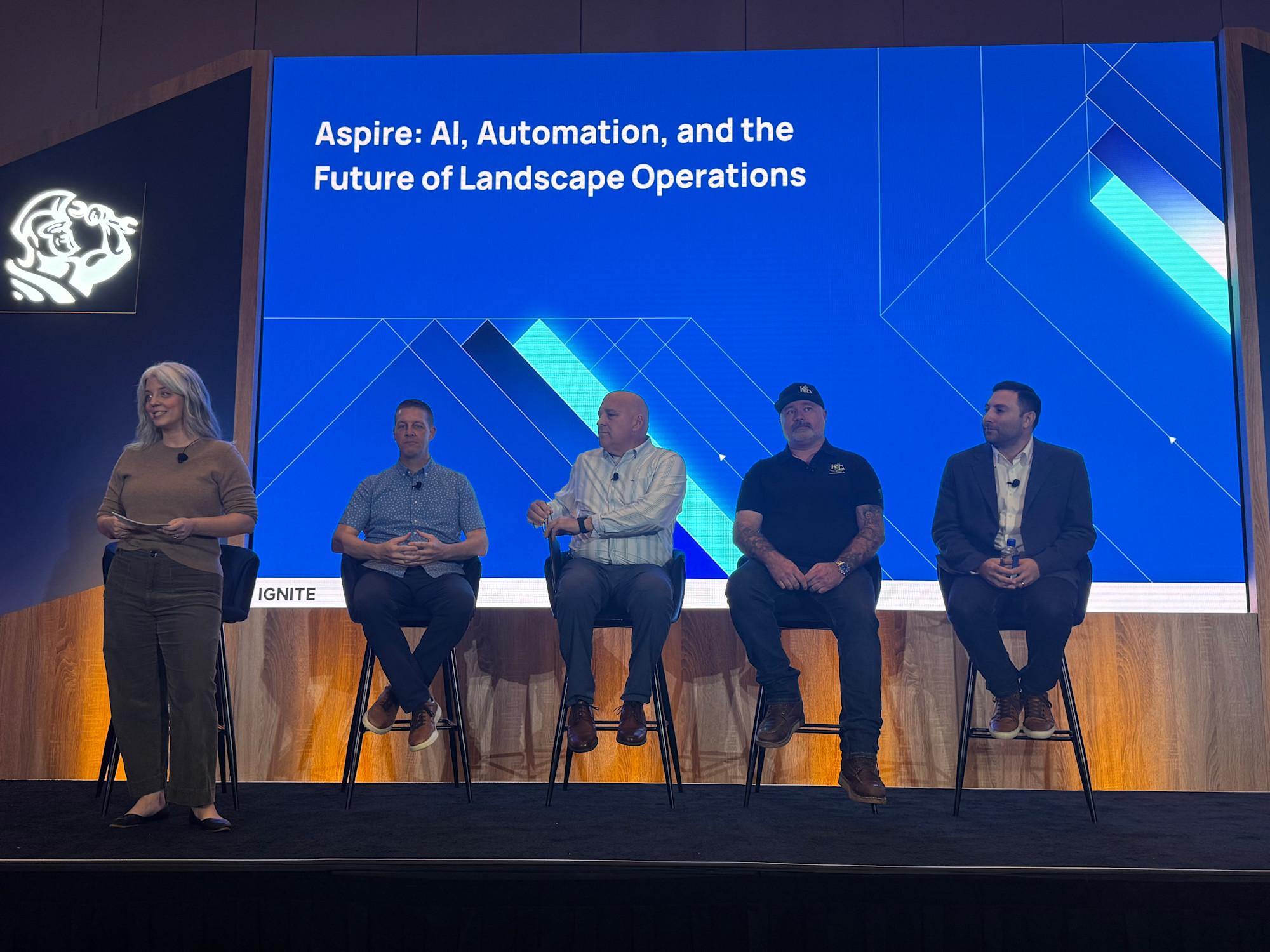
Aspire integrates new hires into structured crews and routes immediately after onboarding, while Crew Control puts scheduling, time tracking, and job details directly in the hands of the field team.
Our platform tracks new-hire productivity from day one, so managers see performance data instead of guesswork. Regular performance reviews based on that data help new hires improve faster and stay longer.
Ready to turn every hire into a productive, measurable member of the team? Book a demo today.






 866-727-7473
 Schedule Demo
 390 S Woods Mill Rd #300 Chesterfield, MO 63017


