


Table of Contents
Table of Contents
- What is the average profit margin for a landscaping business?
- What factors affect landscaping profit margins?
- How to calculate your landscaping profit margin
- What is the ideal profit margin for a landscaping business?
- How to improve your landscaping business’s profit margins
- How Aspire helps landscaping businesses improve profitability
- The bottom line on improving operational efficiency
Running a profitable landscaping business takes more than keeping revenue high. Your margins depend on what you charge, your operating costs, and which services bring in the most money.
In this guide, we’ll look at:
Average profit margins: See what a typical landscaping business can expect to make after expenses.
Monthly operating costs: Break down the biggest expenses, from labor and equipment to insurance and overhead.
Profitable services: Explore services that can give your business more room to grow, such as lawn care, maintenance, and hardscaping.
Job pricing: Learn how to price your work so your total revenue covers costs and leaves enough profit.
Improving margins with Aspire: See how better job costing, estimating, scheduling, and business visibility can help you protect your margins.
By the end, you’ll have a clearer picture of your landscaping profits and where you can improve.
What is the average profit margin for a landscaping business?
Profit margin measures how much revenue remains after a business pays its costs, offering a clear snapshot of financial health. The result appears as a percentage, which makes performance easier to compare across jobs, service lines, periods, and companies of different sizes.
For landscaping companies, two margins are particularly important:
Gross profit margin: That’s the revenue left after direct job costs, such as field labor, materials, equipment costs, and subcontractors.
Net profit margin: This refers to the revenue left after all business expenses, including overhead, insurance, administrative costs, office rent, marketing, etc.
A landscaping company might finish a job with a healthy gross margin but still produce disappointing net profit once office payroll, insurance, vehicles, software, and other overhead costs are included.
So, what is the average profit margin for a landscaping business?
There is no single industry average for the landscaping industry. The services you offer, your operating costs, and how efficiently you run your business all have a strong influence on the answer.
For example, 15% can be enough profit for an early-stage landscaping team to grow, while 15% to 20% is ideal for a residentially focused lawn care business.
What factors affect landscaping profit margins?
Landscaping profitability moves with the operating model. The same company may produce healthy maintenance margins but weak installation ones during the same quarter.
Here are the factors that affect your profitability.
Labor
Controlling labor costs is critical because labor often represents a landscape business’s largest controllable production expense. Margins fall when crews spend excessive time traveling, waiting for materials, correcting work, handling avoidable callbacks, or performing jobs that exceed the estimate.
Track labor by:
Job and property
Service line and task
Crew and crew leader
Estimated versus actual hours
Regular time, overtime, and nonproductive time
Materials
Material prices fluctuate, and small estimating errors add up across a large project or recurring contract. Unrecorded materials, inconsistent markups, waste, theft, poor inventory management, and emergency purchases reduce gross margin without always appearing as an obvious pricing problem.
Control materials through:
Standardized material libraries and cost updates
Purchase-order approval
Job-level material allocation
Waste and variance tracking
Consistent markup rules
Equipment
Equipment affects margin through ownership, depreciation, financing, fuel, maintenance, repairs, replacement, downtime, and utilization. Even if a machine is assigned to a job for only two hours, it still incurs ownership and operating costs while sitting idle for the rest of the day.
Measure equipment cost against revenue and production output. Review utilization by asset and service line, then compare the cost of ownership with rental, subcontracting, route redesign, or replacement.
Overhead
Overhead supports the entire company rather than one job. It includes fixed costs such as office staff, leadership, facilities, insurance, technology, sales, marketing, recruiting, training, accounting, and legal expenses.
Under-allocating overhead creates attractive job margins that fail to translate into company profit. Build a consistent allocation method and apply it across service lines, branches, and customer segments.
Service mix
Your service mix directly affects the average margin. Recurring maintenance often creates predictable routes and repeat revenue, while installation and hardscaping produce larger contracts with greater exposure to materials, weather, site conditions, and change orders.
Review margins by service line rather than relying on a single company-wide percentage. A growing business needs enough visibility to identify which services deserve more sales capacity, require repricing, or create operational drag.
How to calculate your landscaping profit margin
Use a consistent monthly process that connects the income statement to job-level performance.
Collect revenue: Separate maintenance, installation, enhancement, tree care, snow removal, irrigation, and other service lines.
Classify direct costs: Assign labor, materials, equipment, subcontractors, and production costs to the correct jobs.
Calculate gross profit: Subtract direct costs, or cost of goods sold, from revenue.
Calculate gross margin: Divide gross profit by revenue and multiply by 100.
Add remaining operating expenses: Include office, leadership, sales, marketing, insurance, technology, facilities, depreciation, interest, and other costs.
Calculate net profit: Subtract total costs from revenue.
Calculate net margin: Divide net profit by revenue and multiply by 100.
Segment the results: Compare margin by service line, branch, crew, customer type, and job.
Here’s an example: let’s say a landscaping company generates $1,000,000 in revenue during a reporting period.
Direct job costs: $550,000
Gross profit: $450,000
Gross margin: 45%
Operating expenses: $330,000
Net profit: $120,000
Net margin: 12%
The 45% gross margin indicates how much revenue remains after direct job costs, before accounting for remaining business expenses, while the 12% net margin shows how much was left after all expenses. Neither figure explains why performance landed there; that requires a breakdown by service line or job.
What is the ideal profit margin for a landscaping business?
For many established landscaping businesses, a 10% to 15% net margin aligns well with common industry benchmarks.
A company with recurring routes, disciplined pricing, strong production rates, and efficient overhead may exceed that range, while a commercial contractor carrying low-bid contracts, heavy equipment costs, or high travel time may operate below it.
A good margin should satisfy four tests:
It covers direct production costs.
It absorbs overhead and seasonal volatility.
It funds equipment replacement, hiring, training, and technology.
It produces a return that justifies the business risk you’re willing to take and the capital you’ve invested.
Tip: Don’t chase the highest percentage without examining revenue quality. A smaller, recurring contract with strong route density and dependable collections often supports a more resilient business than a large project with volatile costs and weak cash flow.
How to improve your landscaping business’s profit margins
For larger landscaping companies, profit margin improvements usually come from finding the operational leaks that occur repeatedly across hundreds or thousands of jobs.
Understand your margins
Start with visibility. Review gross and net margin separately, then break profitability down by job, service line, crew, and location.
Search for patterns as you do this analysis.
If one service consistently misses its target margin, investigate the reason. The problem might sit in estimating, labor productivity, material usage, routing, or pricing.
The important part is identifying the operational cause instead of simply accepting a lower margin.
Price profitably
Effective pricing strategies, whether using cost-plus or value-based pricing, start with knowing your actual cost to deliver the work.
Build estimates around:
Labor
Materials
Equipment
Subcontractors
Allocated overhead
Target profit
Then compare estimated costs with actual results after the job.
This creates a feedback loop. If a particular type of project repeatedly takes more labor than estimated, update the production assumptions instead of continuing to underprice the same work.
Reduce labor and material costs
Look for gaps between jobs, unnecessary drive time, and situations where one crew is idle while another is overworked. Matching the right skill level to each job can also make a difference.
For example, you don’t need your most experienced technician handling a routine maintenance visit if a less senior team member can do the work just as well.
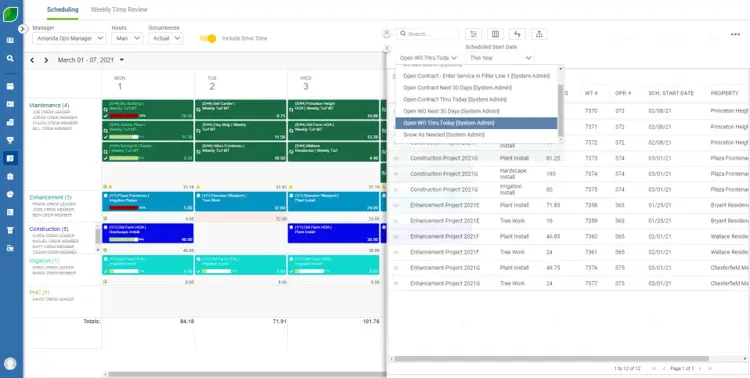
Aspire’s scheduling software can help you organize crews and jobs more efficiently. Its job costing tools give you visibility into estimated versus actual labor, materials, and equipment costs. That makes it easier to spot jobs that are taking longer or costing more than expected.
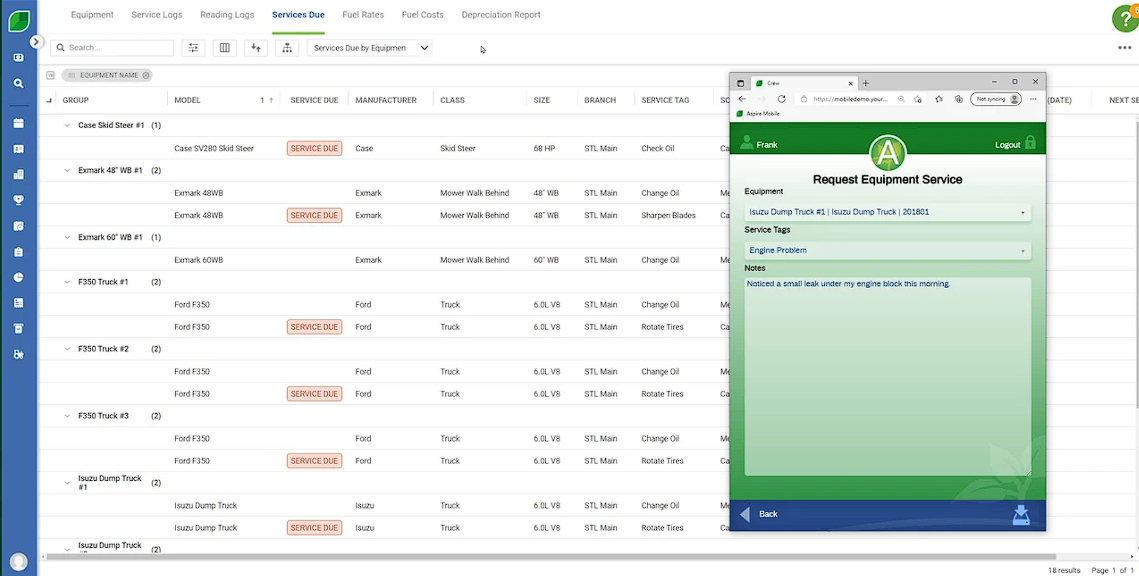
Monitoring equipment costs is also important here. Regular maintenance and better equipment tracking can help prevent unexpected downtime and repair expenses. Aspire’s equipment management features give you a way to keep equipment information organized alongside the rest of your operations.
Learn how to upsell services
Use field observations to identify legitimate additional customer needs, such as seasonal enhancements, irrigation repairs, mulch, pruning, drainage, or plant replacement. Build repeatable recommendations into inspections and customer communication.
Track the conversion rate and margin of each offer. Revenue growth without a meaningful contribution won’t improve overall profitability.
If you want to properly track your growth, use this handy ROI calculator.
Add high-margin services to the list
Irrigation, hardscaping, and landscape design are common options.
Choose depending on what your customers already ask for, what equipment you have, and how much training your team would need.
Adding services that fit naturally with the work you’re already doing can also make it easier to sell more to existing customers.
Before adding a new service, run the numbers. Look at the labor, materials, equipment, and training involved, then compare those costs with what you can realistically charge. This helps you identify services that can add revenue without creating a new set of margin problems.
Invest in recurring revenue
Cutting costs can improve margins, but building more predictable revenue can help too. Maintenance agreements and service contracts turn one-off jobs into ongoing work, giving you a steadier stream of revenue throughout the year.
They can also improve operational efficiency and the economics of customer acquisition. Once a client signs a recurring agreement, you no longer have to spend as much time and money finding a new one just to generate another job. This can make renewals more profitable than constantly replacing one-time projects.
Look at the services you already provide and identify which ones make sense as recurring agreements. Lawn maintenance, seasonal cleanups, or irrigation maintenance services can give customers a reason to stay with you every single year.
How Aspire helps landscaping businesses improve profitability
Aspire connects operational activity with financial performance. Instead of waiting for a month-end P&L to reveal a problem, owners and operations managers review labor, materials, equipment, estimates, schedules, and job results in the same landscaping software for ROI and growth.
Real-time job costing
Aspire’s job costing tracks labor, materials, equipment, and other job expenses against the work. As a manager, you can use it to compare actual performance with estimates and budgets while jobs stay active. This leaves you with plenty of time to correct labor allocation, scope, purchasing, or scheduling issues.
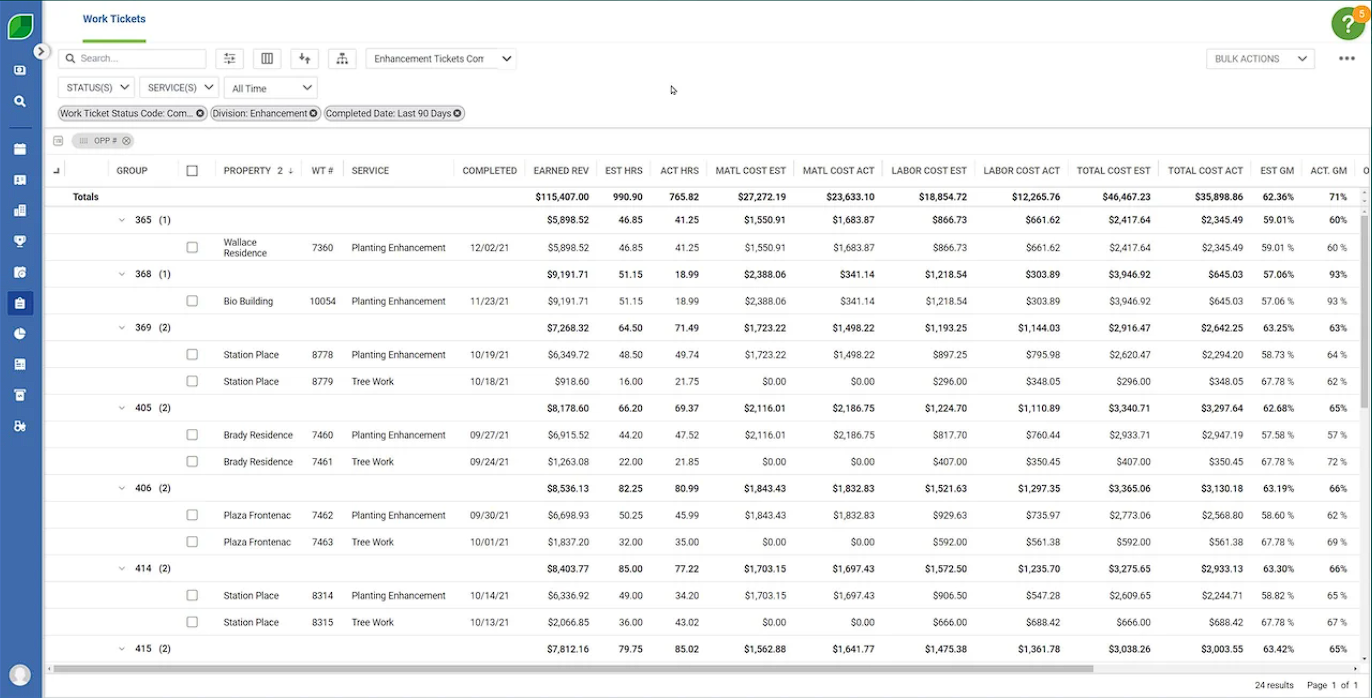
Job-level visibility supports analysis by:
Job and property
Service line
Crew and branch
Customer type
Estimated versus actual production
Accurate estimating
Estimating establishes the expected margin before a job is sold. Aspire’s estimating workflows organize labor, materials, equipment, production assumptions, and pricing so teams build bids from consistent data.

When actual job results feed future estimates, the business strengthens its production standards over time. Estimates become operational benchmarks rather than static sales documents.
Reporting and analytics
Reporting dashboards consolidate data from across the business. These are great for monitoring:
Gross and net margin trends
Labor percentage and production efficiency
Estimated versus actual hours and overhead costs
Margin by job, crew, branch, and service line
Revenue, backlog, and pipeline performance
Exceptions that require management action
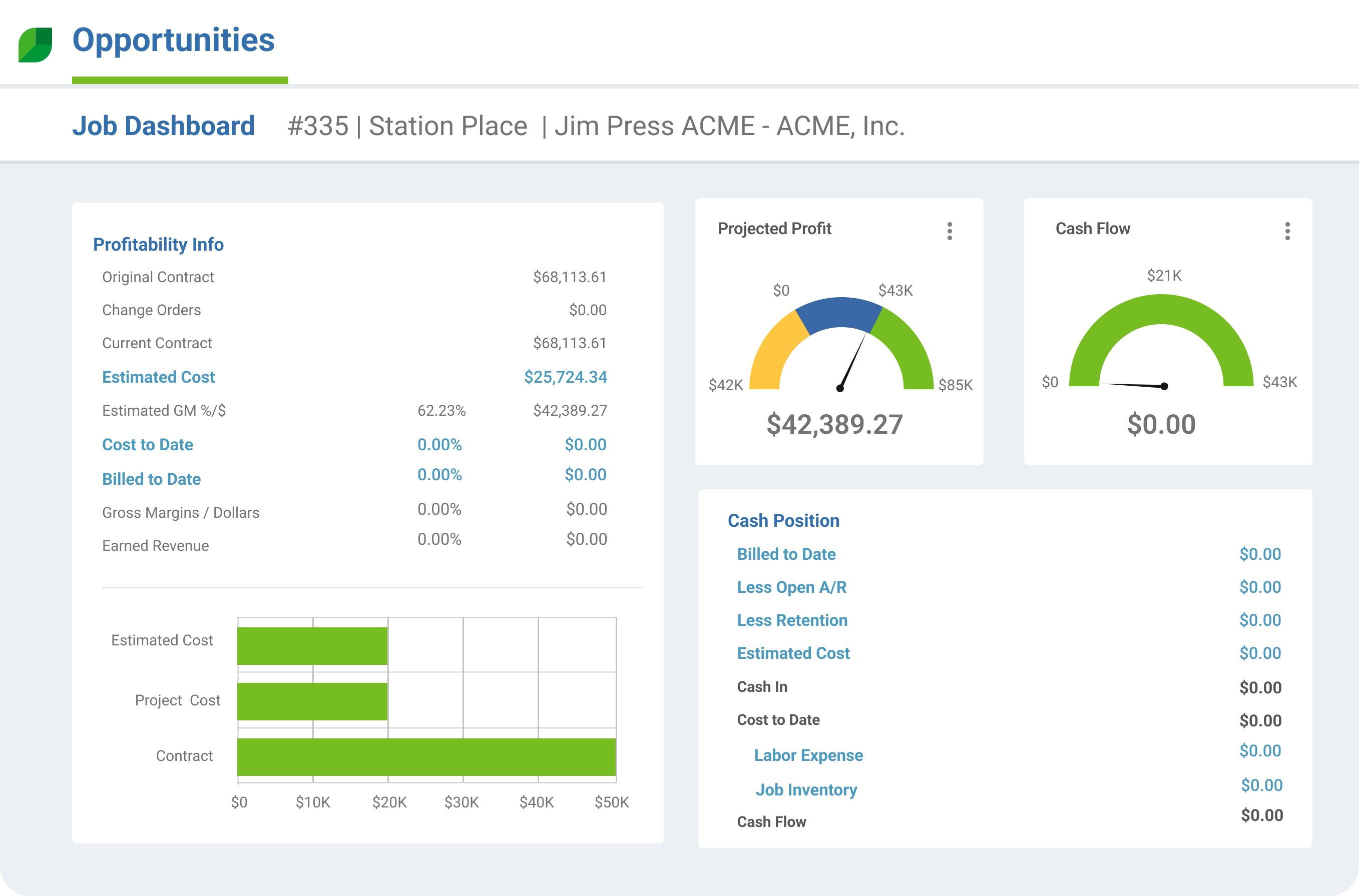
Aspire uses real-time business data to assist landscaping companies in estimating and assessing the profitability of jobs. Managers spot pricing gaps and understand how projections convert into actual job performance thanks to its reporting features, which provide them with visibility into direct expenses and gross margins.
Invoicing and accounting
Aspire’s invoicing and accounting tools connect finished work and approved costs to billing workflows, reducing the risk of unbilled work, missing change orders, or invoices that do not reflect the delivered scope.
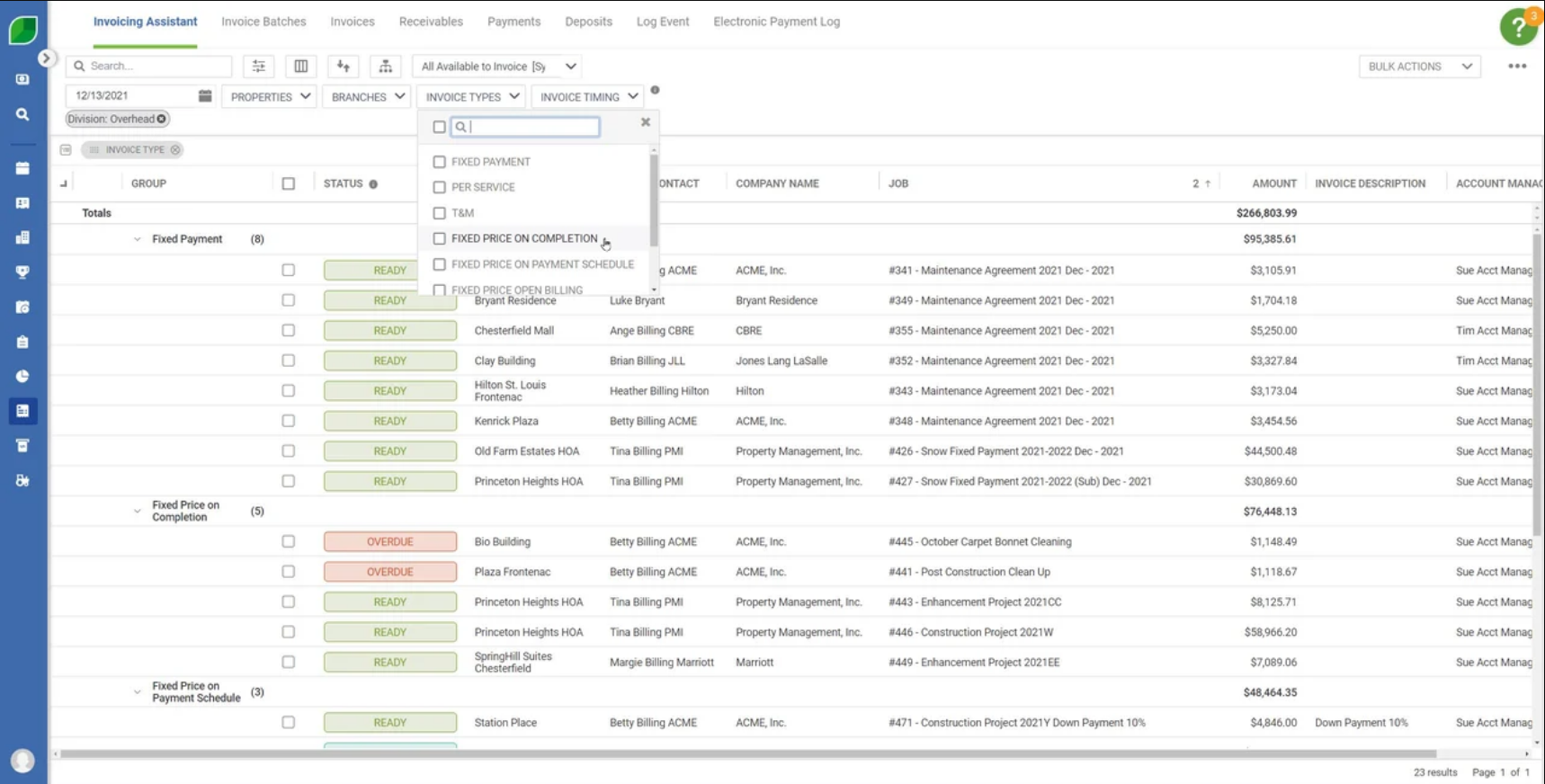
Aspire strengthens the operational data feeding financial statements, helping leaders diagnose margin performance before the month closes.
The bottom line on improving operational efficiency
The next step is to replace broad averages with business-specific visibility. Track actual labor, materials, equipment, overhead, revenue, and margin by job, service line, crew, branch, and customer segment.
Aspire unifies estimating, scheduling, job costing, reporting, CRM, and invoicing so landscaping leaders see where margin is created and where it leaks.
Schedule an Aspire demo to evaluate how job-level financial visibility fits your operation.






 866-727-7473
 Schedule Demo
 390 S Woods Mill Rd #300 Chesterfield, MO 63017


