

Table of Contents
Table of Contents
- Why most landscaping businesses struggle in the off-season
- Step 1: Assess your off-season revenue exposure
- Step 2: Add the right off-season services for your region
- Step 3: Retain your best crew during the slow season
- Step 4: Strengthen the business foundation
- Step 5: Build your spring pipeline before the season begins
- Off-season best practices for landscaping businesses
- Common mistakes to avoid during slow seasons
- How Aspire helps landscaping businesses stay profitable year-round
- Over to you!
Off-season revenue is often a challenge for landscaping businesses that rely only on mowing and routine maintenance. However, planning early gives you more control over the slow winter months.
Besides revealing why most landscaping businesses struggle in the off-season, this guide explains how to make a plan for your landscaping business during the off-season in easy-to-follow steps:
Measure how much revenue drops during the slow season
Add services that match local demand
Keep experienced crew members working with seasonal jobs and training
Use downtime for business planning, pricing reviews, and equipment maintenance
Build the spring pipeline before demand picks up again
Follow off-season practices that protect margins and keep customers engaged
Avoid costly mistakes during slower months
Why most landscaping businesses struggle in the off-season
Here are the main reasons why most landscaping businesses struggle in the off-season:
Reason #1: Revenue depends too heavily on peak-season work.
Routine lawn care and maintenance bring in most revenue during warmer months. Businesses with limited recurring winter work face a steep cash-flow drop while overhead continues.
Reason #2: Experienced crew members leave for other industries.
Workers need a steady income, so many take winter jobs elsewhere. Spring then brings another round of recruiting, onboarding, and training before crews reach normal productivity.
Reason #3: Off-season planning starts too late.
Some landscaping business owners start looking for winter revenue after scheduled work already slows. A written business plan helps set seasonal revenue targets and staffing decisions earlier.
Reason #4: Equipment produces less revenue while ownership costs continue.
Trucks and machines spend more time parked, yet financing and maintenance expenses remain part of the monthly budget.
Reason #5: New winter services enter the schedule before you check the numbers.
Snow work, hardscaping, or holiday lighting add revenue, but weak pricing quickly cuts into the margin.
Addressing these pressure points before winter starts gives your business a better chance at being profitable through the slow months.
Step 1: Assess your off-season revenue exposure
Before adding winter services to your menu, look at your numbers. The goal is to see exactly where revenue, cash, and staffing drop once peak-season work slows.
Pull last year’s sales and separate the income tied to services that stop or shrink during winter. Calculate what percentage of annual revenue comes from seasonal work.
Review these areas:
List the services that produce most of your warm-season revenue. Mowing, planting, and irrigation belong here for many landscaping businesses.
Compare the seasonal revenue with income that continues through winter. The difference shows how much work the off-season needs to replace or absorb.
Check your cash reserve against fixed monthly overhead. Include rent, vehicle payments, insurance, software, and other costs that continue during slower months.
Divide your available reserves by fixed monthly expenses. The result shows how many months of overhead the business already covers.
Review your crew structure. Record how many of your employees stay year-round and how many leave after the busy season.
Account for the cost of hiring and training replacements when spring work returns.
This review gives you a clear starting point, and once the gaps are visible, you can start planning around them.
Step 2: Add the right off-season services for your region
Each market favors a different mix of off-season services. Snow work makes more sense in the Northeast or the Midwest, while landscaping businesses in warmer regions get more value from planting, hardscaping, or property cleanup.
Use these questions before deciding to add each service to your list:
Does local demand stay high enough through the slow months?
Does your current equipment handle most of the work?
Does your crew already have the skills to perform the service safely and efficiently?
Does your pricing leave enough margin after labor, materials, fuel, and equipment costs?
A service that checks most of those boxes gives you a better chance of replacing seasonal revenue without creating a completely new business.
Snow and ice removal
This service gives businesses in the Northeast, Midwest, and other heavy-snow markets a direct source of winter revenue. Existing trucks and experienced field crews also make the transition easier for many businesses.
Services usually include:
Snow plowing for commercial lots and residential properties
Sidewalk cleaning with shovels or snow blowers
Ice management and deicing
Well-priced snow removal contracts increase the margin potential and keep your crews working during winter months.
Holiday lighting installation and removal
Holiday light installation turns existing customer relationships into short-term seasonal work.
Your crew’s work consists of:
Installing holiday decor in late fall
Handling service calls through the season
Removing decor after the holidays
Christmas light installation is one of the best landscaping business ideas for winter because it works in many regions, especially suburban and commercial markets with high seasonal demand.
Outdoor beautification and hardscaping
Hardscaping projects keep your crews productive when lawn maintenance slows. Patios, walkways, retaining walls, and other outdoor improvements also carry larger project values than routine mowing visits.
Warmer Southern and Southwestern markets offer longer installation seasons, while contractors in colder regions also schedule suitable projects during mild stretches.
Also, adding work that is related to your existing skill set makes it easier to run a successful landscaping business without requiring crews to learn new trades.
Fall/winter planting
Cool-season planting extends revenue in areas like the Southeast or Southwest, where soil stays workable throughout fall and winter. Trees, shrubs, overseed work, and winter mulching give customers a reason to book another visit after summer maintenance ends.
Planting windows vary by plant type and local conditions, so regional timing should guide your service calendar.
Pressure washing and gutter cleaning
These services use a different part of the property maintenance budget. Both services work well as add-ons for existing residential and commercial accounts in wet climates and areas with heavy leaf fall.
Pressure washing has a longer season in the South, West, and other areas with mild winters.
Recycling services
Fall cleanup already puts landscaping crews in contact with large amounts of yard debris. Offering eco-friendly landscaping services such as collection and recycling adds paid work to routes that your crews already service.
Common materials include:
Leaves from seasonal cleanups
Branches and brush from tree trimming
Grass clippings and other plant debris
Small amounts of untreated wood waste from property work
Recycling services make the most sense in areas with heavy leaf removal and access to municipal composting or green-waste facilities.
Weed removal and prevention
In many warmer climates, weeds keep growing through winter. Manual removal, bed cleanup, mulching, and permitted weed-control work help fill gaps between regular maintenance visits.
Southern states, coastal areas, and mild Western markets usually have the longest service window.
Landscape designs
Landscape design keeps estimators and designers productive even when field work slows. Clients also get time to approve plans, budgets, and materials before spring schedules fill.
Cold-weather markets gain particular value from winter design work because crews start the busy season with approved projects already lined up.
If you are looking to grow your landscaping business, use design work to feed future enhancement and installation sales.
Step 3: Retain your best crew during the slow season
Keeping experienced crew members through winter saves you from rebuilding teams when spring schedules start to fill up. Crew retention starts with giving your best people enough worthwhile work during slower months.
Plan winter staffing around the employees you most want back in April. Then use off-season services and slower weeks to give them steady hours.
Schedule snow work, hardscaping, holiday lighting, or other seasonal services around your available crew
Set aside quieter weeks for training, such as OSHA safety courses, pesticide licensing where required, or snow removal equipment training
Give crew members useful winter responsibilities beyond field jobs to keep experienced employees involved in daily operations and build loyalty
Discuss winter schedules early with your employees so that both sides have a better idea of expected hours and responsibilities
Once you line up winter work, Aspire’s crew management tool gives you a practical way to match available crew members with each job. Aspire — a business management platform built especially for landscaping teams — has weekly and monthly schedule views that show who is assigned where, helping teams spread labor more evenly and avoid overstaffing or leaving a job short on people.
Step 4: Strengthen the business foundation
Slower weeks give you time to review the past season and fix weak spots before spring work takes over again.
Use that time to tackle the business tasks that peak months push aside:
Review job costing reports by service, property, and crew setup, and look for work that missed its target margin or required more labor than estimated
Refine estimating templates using actual labor, material, and equipment costs from completed jobs
Update contract templates and service agreements before renewal conversations start. Check pricing, scope, billing terms, and service frequency against the previous season
Inspect trucks, mowers, trailers, and all other equipment, and schedule repairs or replacements before spring puts more pressure on shop time and purchasing
To simplify your financial review, Aspire’s reporting feature allows you to drill down into job costs by service type, property, or crew leader and compare estimated costs to actual results.
Step 5: Build your spring pipeline before the season begins
Start filling the spring schedule while winter work is still underway. January and February give you time to contact clients, follow up on estimates, and start your marketing strategies before demand picks up.
Prioritize prospects who are closest to booking:
Offer your existing clients an early-booking incentive for signing spring contracts ahead of schedule. A 5% to 10% discount gives customers a reason to commit before February ends
Contact clients who skipped renewals or stopped booking regular services
Follow up on fall estimates, as some customers simply need updated timing, pricing, or a reminder before approving the work
Start paid search and social ads before your competitors increase their spring marketing, and review current landscaping tech trends to spot changes in how contractors spot and manage prospects
Build lead-generating campaigns around specific services and locations instead of broad landscaping terms
Once those campaigns start bringing replies, the next job is to keep follow-up organized. Aspire’s CRM and pipeline tools help teams see open estimates, upcoming renewals, and past sales activity in one place.
That makes it easier to focus outreach on prospects and customers who are most likely to book spring work.
Off-season best practices for landscaping businesses
Good off-season habits protect margins before winter work begins. A few good decisions made during late summer reduce the rush around staffing, pricing, and sales once regular maintenance slows.
Start planning for the off-season early: Build your winter plan during late summer while crews still have regular work. Set revenue targets, identify services with local demand, and start selling seasonal snow removal contracts before clients begin comparing winter providers.
Price slow-season services on their own margin: Snow removal, holiday lighting, and hardscaping carry different labor hours, equipment expenses, materials, and risks. Build a separate pricing strategy for each service using its actual cost and target margin.
Keep client communication going: Stay in contact with your clients after fall cleanup rather than waiting for spring. Share available winter services, send renewal reminders, and contact clients about early spring booking while the relationship is still fresh.
Track off-season service profitability separately from peak periods: Give each winter service its own revenue and cost record. Compare labor, materials, equipment, and gross margin after the season to see which services deserve more sales effort next year. These numbers also give you a practical way to measure ROI growth against changes in estimating accuracy and operating costs.
Review results while the season is still fresh: Schedule a short financial review after each major winter service period. Record pricing problems, labor overruns, equipment issues, and client demand while the details are still easy to recall.
Common mistakes to avoid during slow seasons
Most off-season problems come from predictable execution mistakes that repeat every year.
Mistake #1. Adding too many services at once
New services need pricing, training, equipment, scheduling, sales support, and supervision. Add just one or two new services that match your current crew and client base, then review the numbers before adding more.
Mistake #2. Underpricing snow removal to win accounts
A low bid fills the route fast, but storms bring overtime, fuel, salt, equipment wear, and extra visits. Price snow removal around real service costs and the margin each account must produce.
Mistake #3. Letting crew members go and expecting them back in spring
Good employees need a steady income during harder months. Give key crew members enough work, training hours, equipment tasks, or shop responsibilities to make staying worthwhile.
Mistake #4. Neglecting equipment maintenance during downtime
Parked equipment still needs attention. Use slower weeks to inspect trucks, trailers, mowers, snow blowers, shovels, and handheld tools before spring demand fills your schedule.
Mistake #5. Skipping the post-season financial review
Total winter revenue hides expensive jobs. Compare labor hours, callbacks, and margin by service so the next off-season plan starts with real numbers.
Mistake #6. Waiting too long to contact clients
Snow contracts, holiday lighting, and fall cleanup work at their best when booked early. Begin outreach while crews still visit properties and account managers have recent conversations to build on.
A short review at the end of winter turns these mistakes into a practical fix list.
How Aspire helps landscaping businesses stay profitable year-round
Off-season work gets harder to manage if every service line has its separate spreadsheet or app. Aspire is a business management platform for landscaping contractors that keeps job costing, estimating, scheduling, and accounting in one place.
Real-time job costing
New off-season services need close cost tracking from the first job.
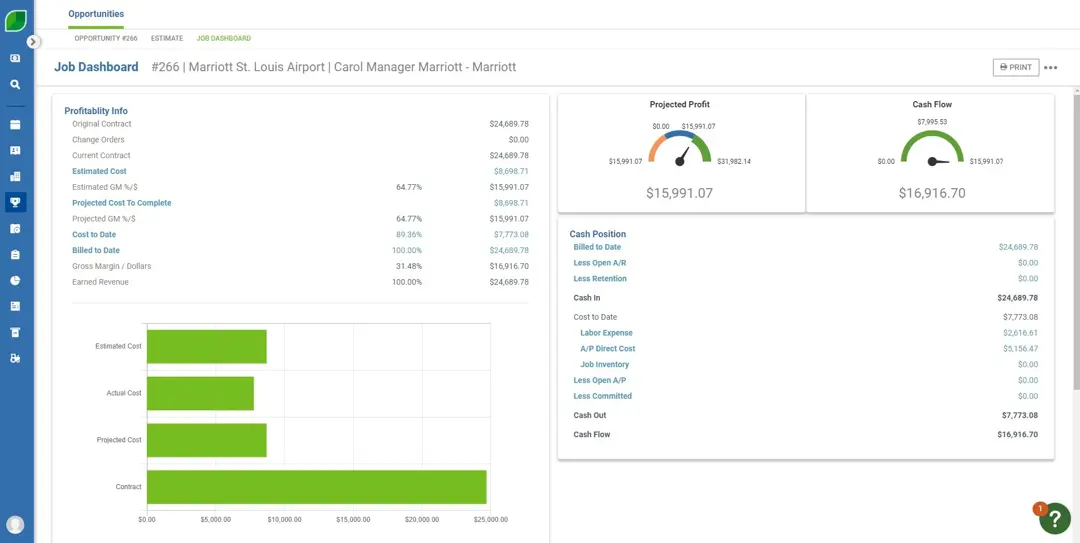
Aspire’s job costing feature helps you compare estimated costs with actual costs as work happens. Crews, service types, jobs, work tickets, and properties all affect the final picture.
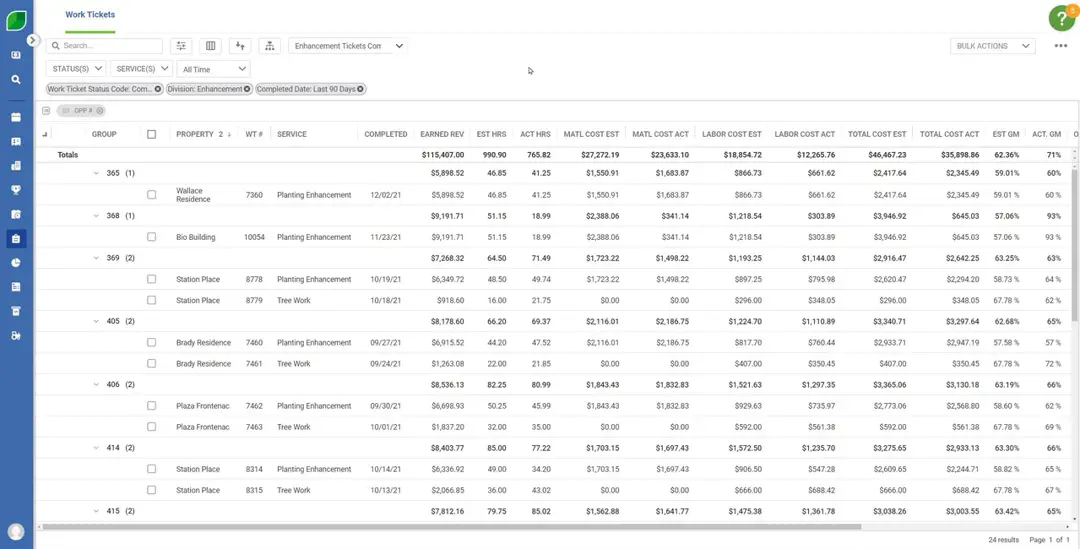
That makes it easier to see if snow routes, winter cleanup, or hardscaping work earn enough after labor, materials, and equipment costs.
Accurate estimating
Winter work needs separate pricing, not recycled lawn maintenance numbers.
With the estimating feature, you can use templates and kits to combine labor, materials, subcontractors, and margins to estimate line items.
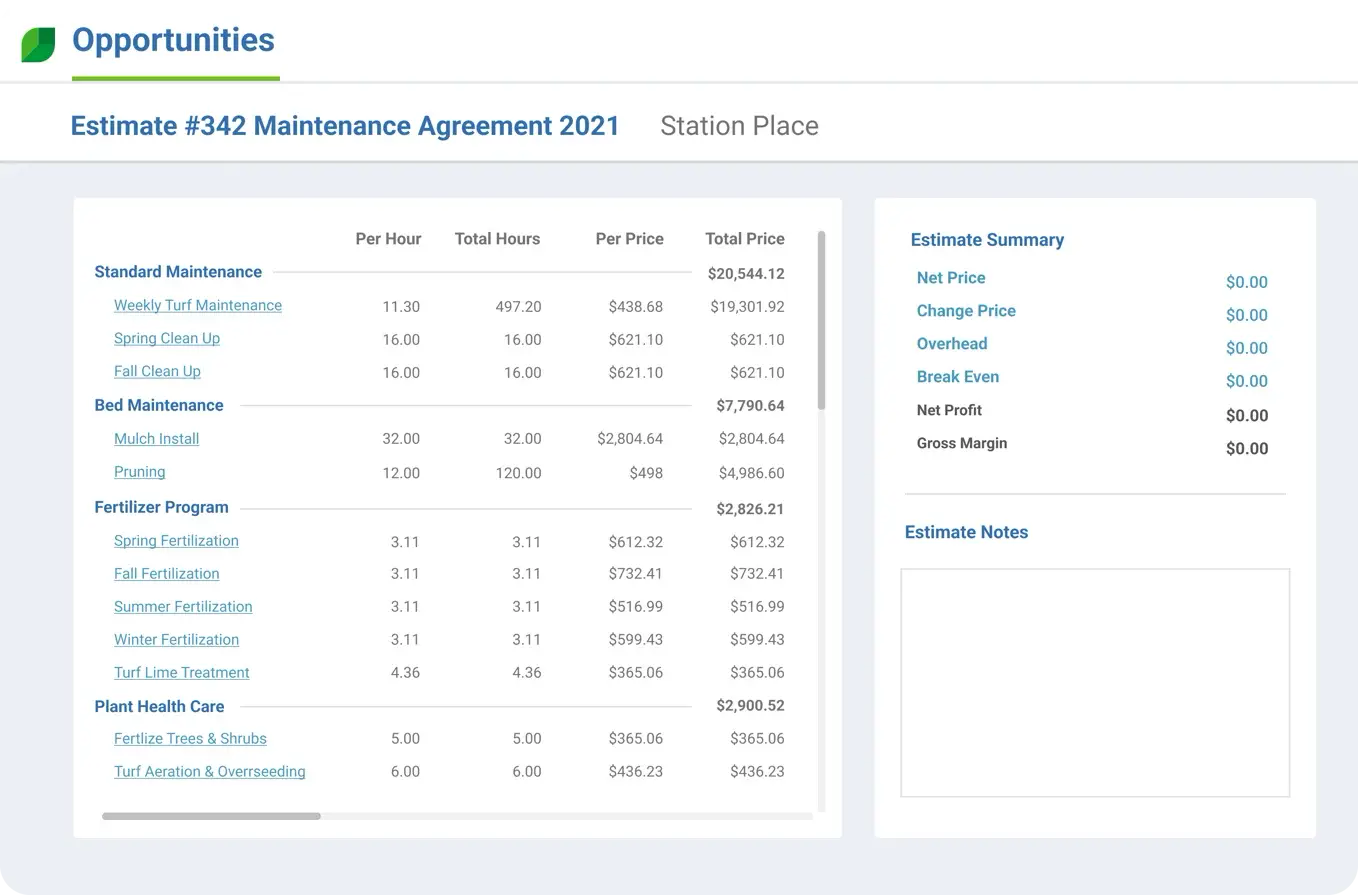
Before crews arrive on the property, estimators price seasonal contracts using the appropriate assumptions.
Seasonal crew scheduling
Winter work depends on weather, route density, and crew availability.
Turn sold work into scheduled tickets and adjust jobs on a shared schedule with Aspire’s scheduling feature.
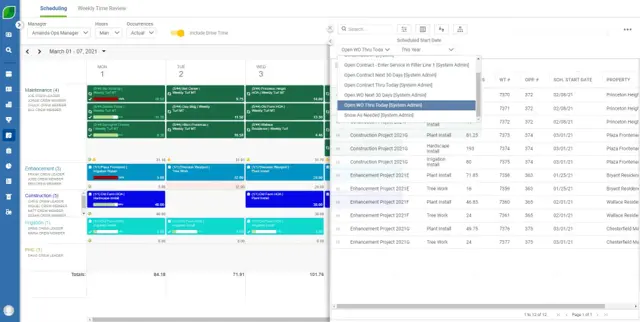
You can see upcoming work, assigned crews, and job progress, which helps keep off-season staffing closer to the actual workload.
Financial tracking and payroll
Off-season profitability depends on clean records after the work ends.
The accounting feature connects job costs, revenue, and accounting workflows so financial data aligns with field activity.
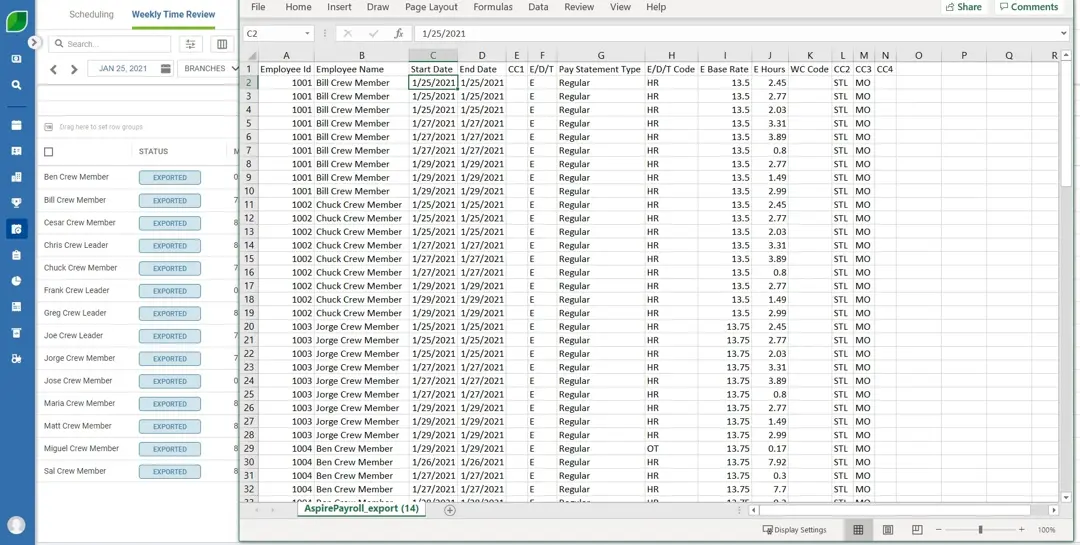
Payroll workflows also rely on accurate time reporting, giving you a clearer picture of labor cost by job.
When off-season work runs through the same system as spring and summer work, decisions get easier.
Over to you!
Winter exposes weak planning quickly. A practical landscaping business off-season plan gives every service, crew, and account a purpose before revenue drops.
Aspire helps your landscaping business manage seasonal work with better visibility so that you can make decisions based on accurate job and crew data.
Ready to plan off-season work with more control? Book a free demo with Aspire to see how the platform helps you manage year-round operations.









 866-727-7473
 Schedule Demo
 390 S Woods Mill Rd #300 Chesterfield, MO 63017


