Table of Contents
Table of Contents
- What is the foundation of scaling a snow removal business?
- How to strengthen your operational infrastructure for growth
- How to invest strategically in equipment to support growth
- How to expand your team and staffing capabilities
- How to strengthen contracts and pricing for scalable revenue
- Use Aspire to support and scale your operations effectively
- Frequently Asked Questions (FAQs)
It’s time to expand your snow removal operations: grow your client base and double your profits.
While this is a good idea and has gotten you excited, it comes with a unique set of challenges. Now, you’re wondering:
Do I have the right system to manage more customers?
How do I ensure consistent quality when the business is fully booked?
What can I do to retain and hire new staff?
How do we even ensure profitability with increased contracts?
If you’re looking to grow your snow-clearing business and manage the demand that comes with it, this resource will be your guide.
Here, you will discover actionable strategies and insights to scale a snow removal business, from operational improvements and staffing strategies to marketing and customer service techniques.
What is the foundation of scaling a snow removal business?
Scaling your business means building on what you already have: existing structures for bidding, client communication, employee management, scheduling, and invoicing.
In short, you need to ensure the company is solid with reliable processes and consistent high-quality service delivery before expanding.
Otherwise, you could end up letting clients down, doing a lousy job, getting bad feedback, and eventually wrecking the business.
As you plan to scale, you need to ask hard questions to evaluate your business’s readiness.
Here are some of them:
How many snow removal projects can your current team manage?
Can they handle more responsibilities and workload?
Is there a process for your entire workflow? Think about how inquiries, proposals, invoicing, estimation, scheduling, equipment management, and client communications are currently taken care of. Is there a defined rhythm to it?
How many and what kinds of tools do you have at the moment?
What’s the feedback from existing customers? Is there a recurring positive or negative comment they give?
These questions help you assess whether now is the right time to scale and give you a strong understanding of your current capacity.
If you can’t confidently show that the snow removal business is ready for growth, your first game plan should be to improve the existing infrastructure.
Keep reading to see how to do that.
How to strengthen your operational infrastructure for growth
The journey to scaling your snow removal business begins with establishing organized operations.
You need to create clear workflows for different aspects of the company, like scheduling, reporting, invoicing, and customer communication.
Here’s how to strengthen existing operations to scale the business:
Leverage technology for repetitive tasks and to optimize operations
Do you manually create and send proposals, schedule projects, assign tasks, and communicate with clients?
That kind of setup makes growth tough because it gets harder to do all those things as your client list expands.
You need a field management tool, such as Aspire, to enhance operational efficiency and automate different aspects of your snow removal business, enabling you to speed up operations.
You can simplify and reduce operational workload with features like:
Real-time scheduling and time tracking
Issue management for reporting incidents
Invoicing
Detailed sitemaps and route optimization
Client communication
This offers a clear workflow for intake, dispatch, service completion, and invoicing. Essentially, a streamlined way to run the business that allows you to scale easily without increasing the burden on your staff.
Improve route efficiency to serve more clients
Efficient routing in snow removal helps strengthen your operational infrastructure.
Here’s why: you replace wasted drive time with well-planned routes, which means less time on the road, lower fuel costs, and better control over your labor expenses.
To optimize your route:
Group clients by location: Clustering customers based on their proximity to each other allows field crews to move between locations quickly and serve more clients during a storm.
Say you have 20 clients, 10 clients along Route 29, five in a commercial district, and others scattered across the city. It’s more efficient to group the clients by area and assign crews to specific clusters.
You get to reduce the team’s drive time and ensure faster snow-clearing services.
Use a map to plan the routes well in advance and create a predictable service sequence so your crew knows where to begin and progress during different storm intensities.
Prioritize clusters: Which client type gets your attention first? Is it residential, government, or commercial customers? Determine a sequence that crews must follow during snow events or storms.
This can be emergency services first, then hospitals, public properties, commercial, and residential clients. The order in which clusters should be followed is entirely up to you. You might, however, want to consider factors such as:
Target audience: If you service only residential clients, you can cluster by proximity to each other. But if you have high-priority clients like hospitals or fire services, you need to schedule them first.
Contract requirements: You also need to look at your agreements before grouping clients. If a customer’s contract includes a fast response time, they must be top of your service list.
Equipment capacity: Prioritize sites that require fuel-powered machinery and take into consideration the ones with proximity to fuel stations.
Leverage tech solutions for efficient route optimization: Use tools like Aspire Mobile to find the best routes for your field crew. It allows you to visualize the sites your crews are scheduled to work from a map view within the software. This ensures you stay on top of jobs and keep in touch with the crew when they’re in the field.
Using route optimization tools also offers real-time tracking, detailed turn-by-turn directions, and automated updates when conditions change. These help maintain consistency, reduce communication errors, and support repeatable routes that operators can follow every storm.
Standardize processes for consistent service quality
Another way to improve your existing operational systems is to document processes so everyone does things the same way.
First, decide on the snow depth triggers for all client types (residential, commercial, municipal, or emergency services). This ensures your workers know when to head out after a snow event.
Next, prepare a working checklist of things the crew must do in preparation for a project. Things like equipment maintenance, client follow-up, servicing the truck, or contract review should be on the list.
You also need a checklist of steps all crew members must follow when they arrive on a site. This could include checking for accessibility, pedestrian zones to avoid, before-and-after photos, starting off with priority areas, and applying ice melt.
Creating a standardized process helps you:
Complete projects fast.
Be more consistent.
Protect yourself from liability claims.
Train new hires so they understand their responsibilities quickly.
This makes it easier to scale the business when you’re ready. Without this documented process, everyone on the team will probably do what they think is right, leading to chaos, project delays, endless back-and-forths, disputes, and client complaints.
How to invest strategically in equipment to support growth
Strategic equipment investment is the difference between startups and businesses built for growth.
If you have three blowers, three spades, and a plow for 20 clients, you may be fine for now. Adding more customers to the list might mean reduced response times, exhausted crews, and broken contracts.
You need a plan for getting more gear to execute projects and avoid delays.
Here’s an equipment strategy that supports sustainable growth:
Monitor current equipment usage
First, assess the performance and limits of your current tools. How many properties can they service after a 6-inch snowfall or whatever the average is in your region? Can operators confirm their effectiveness and fuel efficiency?
Consider factors such as breakdown frequency and hours per site. A tool like Aspire can provide such visibility into your assets once you log them into the system.
Create a maintenance plan
Based on your assessment of the gear, determine whether it needs a repair, a cost-effective upgrade, or a full replacement.
If your crew can consistently work at 50% capacity without turning away clients, consistent maintenance and frequent upgrades (e.g., adding attachments, plows, and spreaders for efficiency) might be enough for growth. In that case, you need to decide on service frequency and train the crew on best maintenance practices before and after a job.
Here’s what a good maintenance plan could look like for you:
Pre-season inspection: Fluid checks, hydraulic checks, oil change, blade replacement or sharpening, and testing all electrical systems.
In-season maintenance: Daily checks of fluids, tire pressure, and lights. Grease all fittings after storms and make necessary repairs as soon as possible.
After-storm checks: Consistently wash off salt or deicing chemicals, refuel, and inspect equipment for damage.
However, if your crew is always at 90-100% capacity and you keep turning clients down, that’s your sign to get new gear.
You’re also due for a change if the repair costs exceed 50% of the replacement value or the equipment’s downtime frequency increases.
Build a scalable, long-term equipment strategy
When you’re ready to buy snow removal tools, plan purchases based on your estimated growth and current needs. Whether you're aiming for 30% more clients next season or just landed 10 new customers, your buying plan should cover it.
For what you need immediately, consider leasing from vendors. Purchasing new snow removal equipment isn’t very favorable during winter because of high demand.
Leasing is also good for seasonal flexibility. This way, you don’t have to spend on pre- and post-season equipment maintenance for machines used for a few months yearly.
Once you’ve addressed immediate needs, plan long-term purchases strategically. Target summer, late spring, or fall, when demand is considered low, and suppliers offer better pricing.
That’s a good time to purchase snow removal equipment that becomes part of your permanent fleet.
This ‘lease now/buy later’ approach lets you scale sustainably. It solves urgent needs through leasing and helps build assets when it’s financially smart.
How to expand your team and staffing capabilities
To scale effectively, your workforce needs to grow. Otherwise, you risk having overworked staff and unhappy snow removal customers.
Since the business is still growing, here are ideas to expand and strengthen the team:
Hire seasonal workers: Since snow removal is seasonal, it makes financial sense to hire field crews only during the winter months and not permanently. This means no salary or benefits once the snow season ends.
To ensure consistent seasonal workers, consider offering a renewable one- or two-year contract with guaranteed work, so you have the same team year after year.
Work with subcontractors: You can take on additional projects if you have a good network of independent plow, deicing, or equipment operators around you. These are contractors you hire when there’s an overflow of work.
You own the contract and will manage client relationships, but they focus on tasks assigned to them. Working with subcontractors allows you to confidently scale up without getting new equipment and to cover multiple sites simultaneously.
However, this might mean inconsistent work quality since they’re not technically your staff, increased client complaints directed at you, and reduced profit margins due to shared revenue.
Build a reliable operations team: You need a dependable back-end team to keep things running smoothly, especially if you intend to work with subcontractors or seasonal workers. Depending on your budget, this can include:
Operations manager to oversee daily execution, quality control, and staff management.
Dispatcher to monitor the weather, coordinate with crews, and provide emergency communication during storms.
Office manager who handles client communications, documentation, and billing.
Field personnel and an experienced foreman who can manage routes and ensure top-quality service.
Maintenance technician to repair equipment and prep it for work.
You can start with yourself, a dispatcher, and field crews. Then, add crews as your capacity increases.
Organize regular training sessions: Teach the field crew, especially new ones, how to handle equipment safely. Set service standards that workers are expected to meet for multiple client types. How should they navigate clearing snow at a site with limited accessibility? How do they handle bad clients?
What would an effective property walkthrough look like? What communication protocols are in place for clients and the office staff? What are the best practices for clearing snow in a storm?
Provide checklists: To reduce errors and ensure company-wide consistency, create checklists for the crew to follow. Outline the key steps to follow when a contract is won, during site visits, throughout the project, and after completion. This way, everyone can tell when they’re on track or not and ensure consistency.
How to strengthen contracts and pricing for scalable revenue
You need a strong contract and pricing approach to predict the business’s revenue and track growth opportunities. This ensures you can comfortably cover costs without chasing payments.
Here’s how you can strengthen your contracts and pricing strategy:
Offer clients multiple pricing options (e.g., per event, per hour, or seasonal) to give them flexibility and ensure you have consistent cash flow. This attracts clients and protects your bottom line.
Price services with your desired profit margin in mind. Factor in actual costs, e.g., fuel, equipment, insurance, overhead, and then include a profit margin. Doing otherwise means losing money and limiting your ability to scale.
Define service terms and conditions to protect your business from disputes. Ambiguity and unclear terms leave the contract open to misinterpretation from clients. As a result, you become prone to claims that could cost a lot in the long run.
Prioritize seasonal contracts over single-event projects for recurring revenue. Such predictable income helps with growth, as it allows you to pay for overhead costs, equipment financing, and crew employment.
Streamline billing with an automated invoicing system for easy cash flow and to reduce payment collection issues.
Use Aspire to support and scale your operations effectively
If you’re going to scale your snow removal business, you need the right systems to automate processes and streamline operations.
Aspire provides a centralized system that allows you to run the business efficiently, handle more clients, and stay in control.
Here’s how Aspire helps you scale operations:
Simplified bidding process: Need to bid on multiple projects? Aspire’s estimation feature provides templates to generate proposals. You can log snow removal services offered to the system.
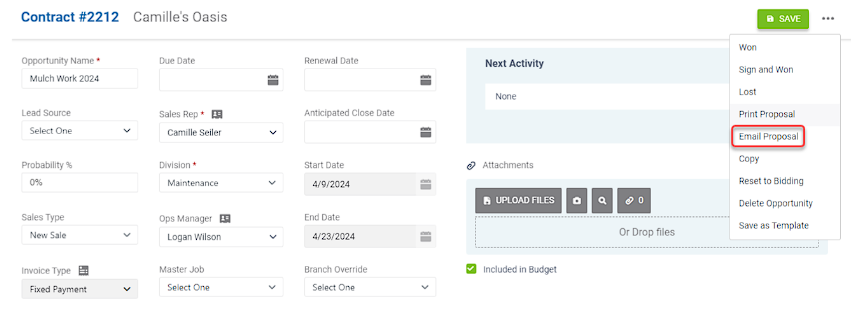
And when it’s time to send a proposal, add the services from your catalog along with margins and markups established for labor, materials, subcontractors, and other direct costs automatically factored into your estimates for profitability. This helps you estimate and send several proposals with ease.
Centralized scheduling: When a bid is won, you can easily schedule jobs using the details from the estimate.
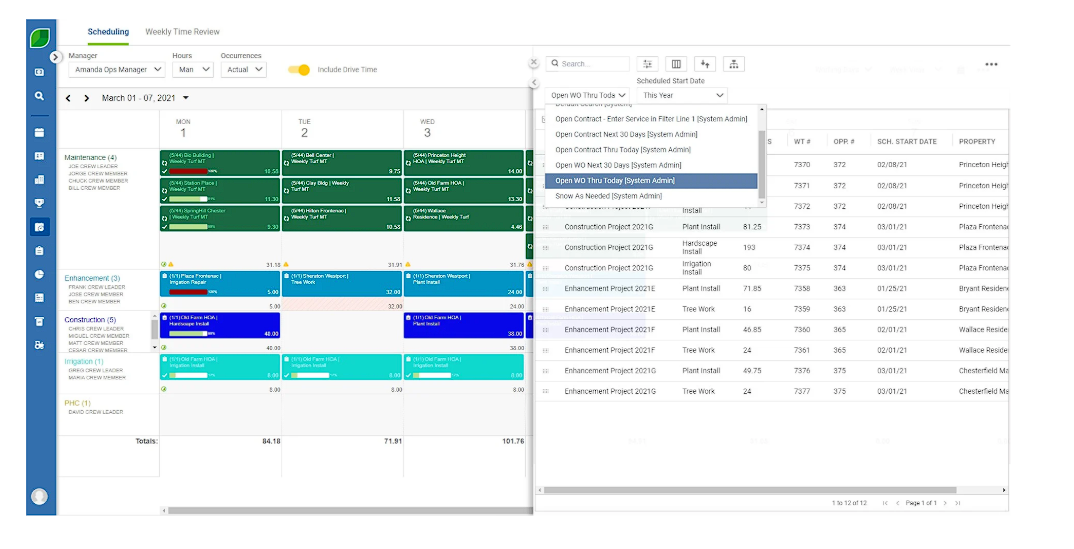
Routes, assignments, and crew schedules are handled from a single location, making it easy to handle dispatching. You get to serve more clients without confusion.
Route optimization: Guide your crew on the best routes to take via mobile and arrive faster than ever. Aspire even has a mobile app that allows you to give field workers clear instructions when they’re in the field. This streamlines communication and helps them get more done.
Billing automation: With Aspire, you can generate and send invoices, whether instantly or progressively, based on the customer’s preference. It shows invoices with outstanding tasks, due, overdue, or ready to send.
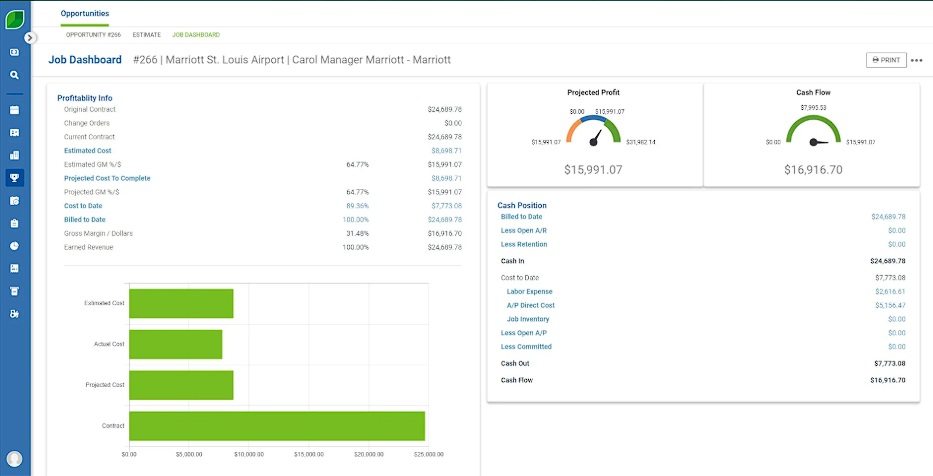
You can share hundreds of invoices at once via email or the customer portal. It also offers multiple payment options for clients to choose from, ensuring consistent cash flow.
Reporting: Considering Aspire centralizes operations, it’s easy to generate reports about every aspect of your business. Want to know which client brought in the most revenue?
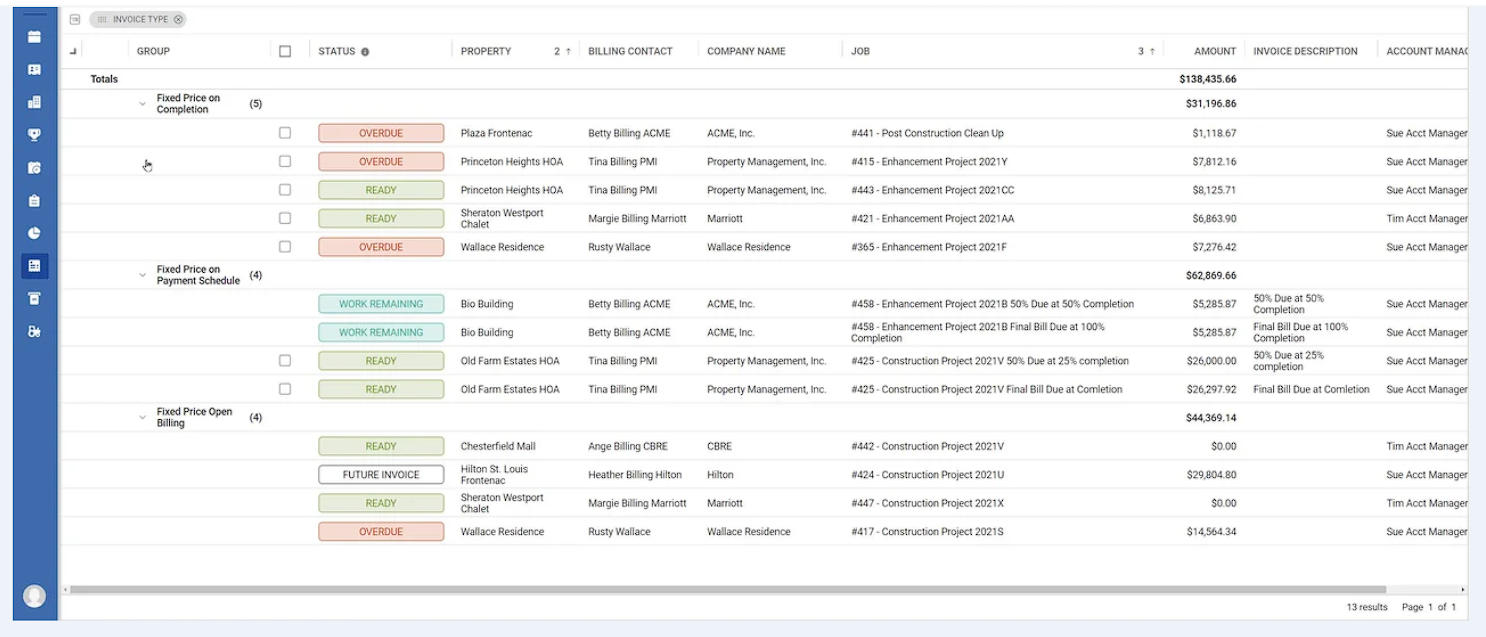
You can track it. Most productive employee? You can monitor their work hours. Need to know your profit and loss statement from the last quarter? It shows you.
Aspire provides detailed business insights, so you have the right information needed to make strategic growth decisions.
Want to see how it works and helps you scale faster?
Schedule a live demo today.
Frequently Asked Questions (FAQs)
How can I keep my snow removal business profitable during light-snow winters?
To stay profitable during light winters:
Control labor costs by reducing drive times, overtime, and equipment maintenance, so unexpected repairs don’t take a chunk of your profit.
Offer add-on services like pre-treatment, roof snow removal, or cleaning in between storms.
Consider seasonal contracts so your income isn’t technically tied to snowfall.
What financial metrics should I track when scaling my snow removal business?
You need to track labor-to-revenue ratios, materials costs, the profit margin each account generates, and the cost per service. Monitoring these helps you identify profitable clients, find affordable supply vendors, and make better equipment/staffing decisions.
How can I reduce liability risks as my snow removal business grows?
Consistently train your field employees to provide quality service.
Draft a solid contract that outlines the clients, your responsibilities, service exclusions, trigger depths, and response times.
Increase your insurance premium as you take on additional clients.
Regularly maintain equipment to avoid failures and property damage.
What types of clients are most valuable for scaling a snow removal business?
To grow your business, target:
Commercial accounts like retail centers, medical facilities, or office campuses. They often require long-term services and don’t mind a seasonal contract, providing predictable income to grow the business.
Municipal clients are also valuable clients. Public libraries, parking lots, or even public transport areas all need snow removal services and are typically consistent with payments.
You can also target residential accounts and HOA communities for efficient routes that can support scalable growth.






 866-727-7473
 Schedule Demo
 390 S Woods Mill Rd #300 Chesterfield, MO 63017


