Table of Contents
Table of Contents
- What are valid reasons for terminating a snow removal employee?
- What process should employers follow to terminate a snow removal employee?
- What are some common mistakes to avoid when firing a snow removal employee?
- What are the risks of wrongful termination claims in snow removal?
- What are some tips for firing a snow removal employee professionally?
- What are the best practices for managing and firing seasonal snow removal workers?
- What alternatives to firing exist for snow removal attendance or performance issues?
- How to improve employee performance and management with Aspire
- Over to you!
Firing an employee is never pleasant, but in the snow removal industry, you cannot afford to have employees who are not the right fit. Despite all the training. Despite all the second chances.
Whether it’s because of no-shows during a blizzard, unsafe use of equipment, or a bad attitude, letting someone go isn’t easy, especially if it affects crew morale and your bottom line.
The key to firing is to do it with professionalism and respect. When done right, it protects your company and keeps your reputation strong.
This guide will walk you through the best practices for letting snow removal employees go, common mistakes to avoid, the risks of wrongfully terminating an employee, and more.
What are valid reasons for terminating a snow removal employee?
There are several valid and lawful reasons why a snow removal company has to let an employee go, including:
Poor performance: One of the most common reasons for firing a snow removal employee is consistent poor performance, such as incomplete jobs, ignoring client instructions, or failing to meet quality standards.
In an industry where precision, attention to detail, and safety are key, repeated mistakes can damage your reputation.
Repeated absenteeism: Frequent no-shows without notice are unacceptable in snow removal, which is a time-sensitive industry.
While legitimate absences due to dangerous weather, illness, or similar reasons are understandable, missing shifts without a valid reason leaves clients stranded and crews overwhelmed.
Safety violations: Safety is non-negotiable in this field.
Employees who consistently ignore safety protocols, misuse equipment, or put themselves and others at risk have no place in your business.
Unprofessional behavior: It’s normal for employees to feel stressed in extreme conditions, but that doesn’t excuse rude and disrespectful behavior toward supervisors, clients, or teammates. It undermines morale and the company culture as a whole.
What process should employers follow to terminate a snow removal employee?
Letting an employee go is never easy. But if you follow a fair and structured process, it helps protect your business and ensures the decision is handled professionally.
Here’s what you need to do:
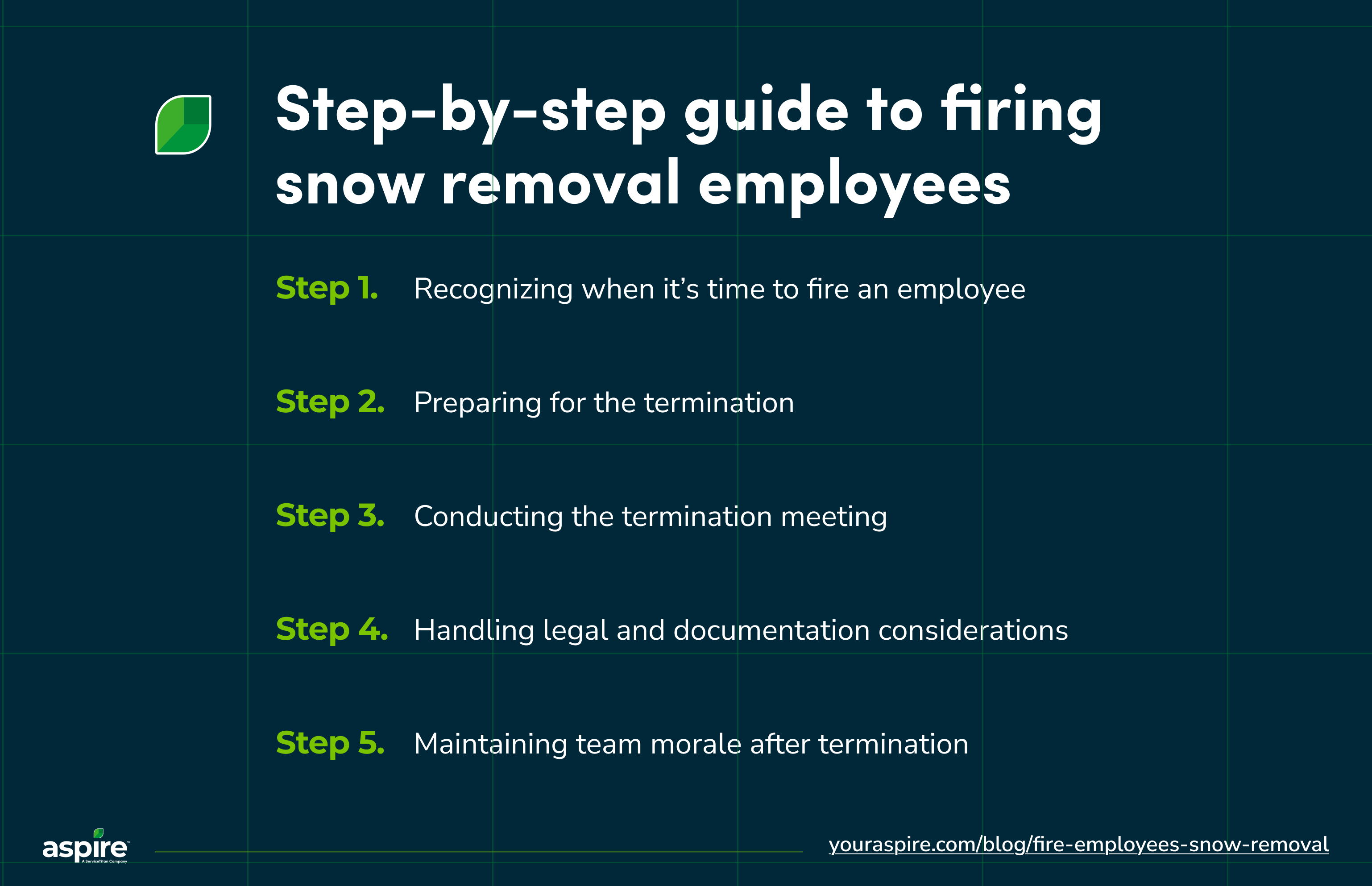
Step 1: Recognizing when it’s time to fire an employee
The first step in firing a snow removal employee is to recognize clear signs of behavior or performance issues that could jeopardize your operations.
These include:
Repeated no-shows during crucial snow events.
Ongoing performance problems, such as unfinished areas or sloppy work.
Lack of improvement despite training.
Safety violations, such as mishandling heavy machinery.
Before moving forward and making a rash decision, ask yourself:
Have you warned the problematic employee, and are they aware of their misconduct?
Was the employee given a fair chance to improve?
If these issues persist despite your efforts, it’s time to consider firing them.
Step 2: Preparing for the termination
Once you’ve decided to fire someone, it’s time to ensure the process goes smoothly and professionally.
This means more than just scheduling a meeting and breaking the news. It’s also about gathering documentation, planning your message, and making sure the decision is legally sound.
Gather all the evidence of poor performance, warnings, attendance records, and other relevant documents.
For instance, with Aspire’s reporting tools, you can analyze job performance and an employee’s history with the company.
Doing so ensures that your decision is based on facts rather than emotions and protects your business if the termination is ever challenged. It’s also a good idea to review termination policies to ensure everything you do follows local labor regulations.
Next, decide on logistics: where and when the private meeting will take place, and who should be present.
Step 3: Conducting the termination meeting
Keep the meeting clear, respectful, and professional, regardless of your feelings on the issue. Set the right tone by getting straight to the point: explain to the employee that their employment is ending.
Say, “We are here to discuss your employment at [Company Name].” Explain the reasons for termination (e.g., repeated no-shows, safety violations, etc.) directly and objectively.
Avoid vague language or lengthy explanations, which fuel arguments and create confusion. Cite specific examples of poor performance, misconduct, or breaches that influenced this decision—and always stick to facts.
Outline the final steps of their employment, such as when they’ll receive their final pay, what to do with company property, like uniforms or keys, and details about their benefits.
Staying professional and unbiased not only protects your company but also ensures the employee leaves with dignity.
Step 4: Handling legal and documentation considerations
To protect your business and avoid complications, it’s vital to finalize all legal and administrative details. In snow removal, where work is often seasonal and fluctuating, proper documentation ensures compliance and reduces the risk of disputes.
Start by recording the reason for termination in detail, and keep copies of all written communication between you and the employee (including meeting details, what was discussed, and what was agreed upon).
Depending on state and local laws, you’re required to review the final pay, severance, or notice period to ensure you’re meeting all obligations, as well as to determine if the employee is entitled to specific benefits.
Doing all this safeguards your company legally and demonstrates professionalism and accountability.
Step 5: Maintaining team morale after termination
Firing someone doesn’t affect just you but also your crew. In snow removal, teamwork and trust are critical during harsh storms, so maintaining morale after a termination is essential.
You don’t need to share any private details, so keep the message simple: you made this decision based on the employee’s poor performance or breach of company policies. Doing so helps prevent misunderstandings.
Take this chance to remind the team of your company’s values, expectations, and goals. This will hopefully help prevent future performance issues.
Make sure to show appreciation for the remaining workforce. Be present and listen to their concerns, helping promote a positive work environment where they can express themselves freely.
Maintaining open communication, offering support, and recognizing good work will help team members feel secure, focused, and motivated.
What are some common mistakes to avoid when firing a snow removal employee?
Employers who mishandle the termination risk damaging their reputation or even facing legal trouble. To ensure professionalism and fairness, avoid these common pitfalls:
Lack of documentation: Firing someone without a clear paper trail of client complaints, written warnings, or attendance records leaves you vulnerable to disputes.
Not giving prior warnings: If you terminate someone’s contract without progressive disciplinary action, such as verbal or written warnings, you deny the employee a fair chance to improve.
Acting on emotion: Decisions made in frustration or in the heat of the moment, especially during high-stress snow events, often backfire. Try to stay calm and follow the structured process outlined above.
Poor timing and privacy: Never fire an employee in front of peers or on the job site. Choose a private, respectful setting to break the news and document the meeting.
Overlooking the final details: Forgetting to arrange final paychecks, collect equipment, or provide termination paperwork only creates confusion and frustration.
Inconsistent application of rules: Letting some employees’ mistakes slide while holding others accountable for the same mistakes damages trust and exposes your company to claims of unfair treatment.
Letting an employee go has its risks, especially if you fire them without a good reason. The following section will explore the potential consequences of this.
What are the risks of wrongful termination claims in snow removal?
Wrongful termination poses a serious risk.
Employees who feel they were fired unfairly can pursue legal action, which can lead to reputational damage, costly settlements, and even lost contracts.
One of the biggest pitfalls is failing to follow the proper procedure. Letting someone go without appropriate documentation for violations makes defending your decision in court challenging.
Similarly, firing someone without a warning or allowing them to improve appears arbitrary.
Be cautious of retaliation or discrimination claims. For example, terminating an employee after they filed a complaint or raised a safety concern is considered unlawful retaliation.
Firing someone based on age, gender, race, or disability also carries legal risk and is seen as bias.
Finally, failing to accommodate protected absences (e.g., medical leave, safety concerns, or federally mandated time off) amounts to a compliance violation.
What are some tips for firing a snow removal employee professionally?
Here are some key tips for firing an employee respectfully and efficiently:
Stay calm and professional: Enter the meeting with a clear head and avoid emotional reactions. Maintain a neutral, matter-of-fact, and respectful tone to set the mood right from the start.
Prepare for emotional reactions: A termination is not good news in any circumstance. Some people will get angry, others will be frustrated, and others will be sad. Anticipate these responses and remain composed, keeping the focus on facts and next steps.
Keep communication clear and concise: Explain the reason for the termination using documented facts, such as performance issues or safety violations. Avoid giving drawn-out explanations, debates, or personal judgments, as they can lead to conflict.
Plan logistics: Before the meeting, which should take place in a private setting, make sure you have all the documentation ready.
Up next, what happens when you have seasonal workers who looked good on paper but proved to be unfit for the job?
Let’s find out.
What are the best practices for managing and firing seasonal snow removal workers?
Managing seasonal snow removal workers poses a challenge because they often join for short periods, work long hours in unpredictable weather, and have limited experience with your company’s standards.
To avoid confusion and ensure smooth operations, start with clear contracts that outline the terms of seasonal employment, including expected work hours, pay, and the conditions under which termination occurs.
This level of transparency sets expectations from day one and provides a legal framework for any sudden termination of employment.
At the end of the season, conduct performance reviews. Here, you provide constructive feedback, address performance issues, and document accomplishments or shortcomings.
This review aims to give employees insight into their work and provide a formal record in case termination is needed.
Following these rules will help you reduce conflicts.
What alternatives to firing exist for snow removal attendance or performance issues?
In some cases, there are effective alternatives to firing, even when attendance and performance are poor, such as allowing employees to improve. These strategies aim to maintain morale and avoid disrupting the workflow by replacing staff mid-season:
Retraining: Provide additional instruction on proper snow removal techniques, safety procedures, or equipment use.
Shift adjustments: Modify the crew’s schedule to better accommodate the employee’s availability.
Temporary suspension: Implement a short, unpaid, or paid suspension to emphasize the seriousness of repeated violations and give the employee time to reflect.
Written agreements: Establish a plan outlining clear expectations, deadlines, and consequences if standards aren’t met.
Counseling: Offer one-on-one guidance to address work-related issues constructively.
But you know what they say: prevention is the best cure.
Before you resort to firing people, try Aspire—the perfect solution for improving performance and crew management.
How to improve employee performance and management with Aspire
Aspire offers a suite of tools designed to help snow removal pros better monitor their employees, identify training needs early, and make informed management decisions.
All while saving time and improving accountability.
With the Aspire platform, managers can monitor individual and team performance on every job. It’s easy to track task completion, quality, and client feedback and to quickly identify areas where employees are struggling.
Accessing real-time insights and data enables proactive coaching, retraining, or other corrective actions before they escalate into larger problems.
Another benefit of using Aspire is that it keeps everyone in your business in sync and on track. Aspire’s scheduling functionality ensures your employees show up on time during severe snowstorms.
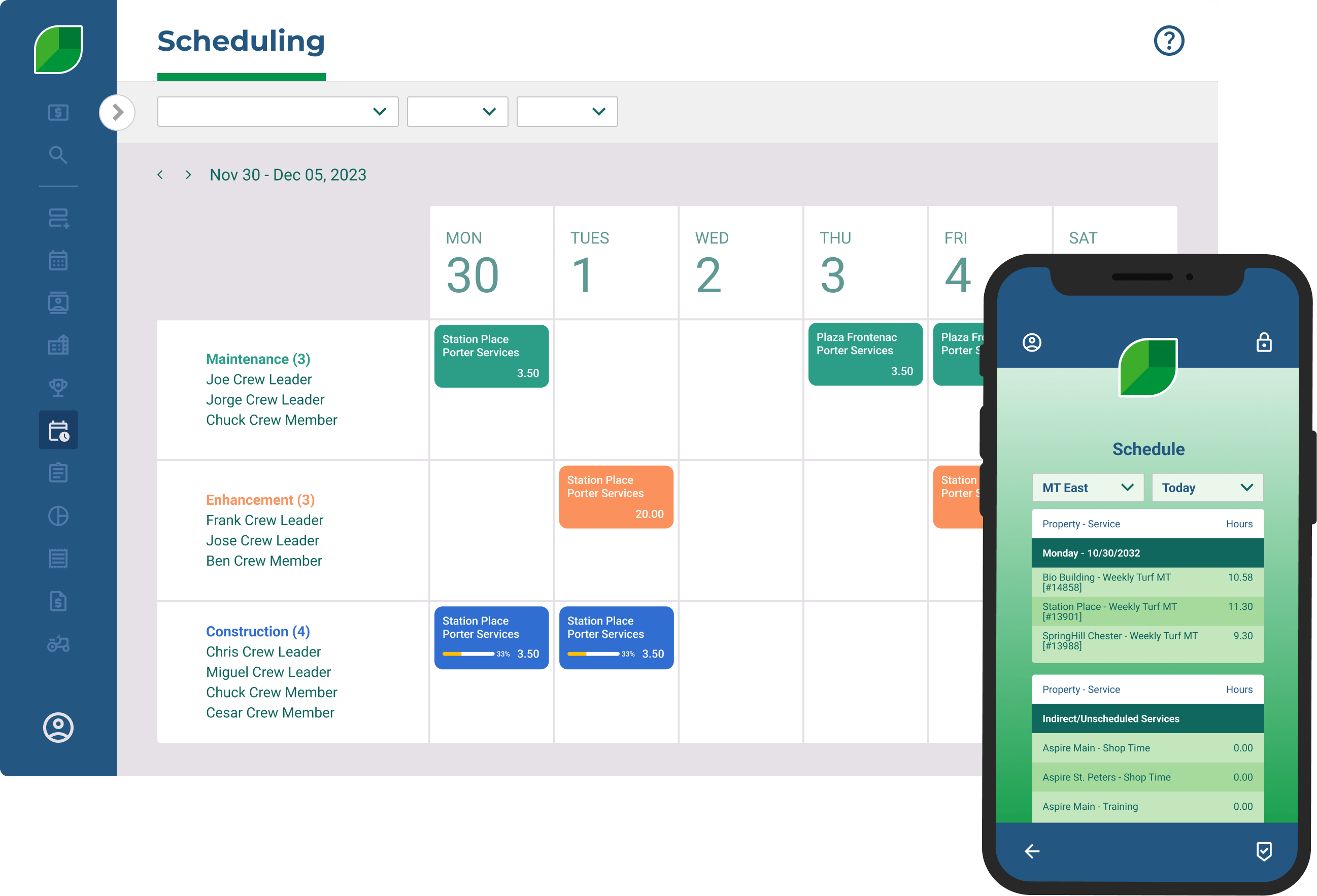
Aspire’s time tracking and attendance features make it easy to record hours, spot no-shows, and maintain accurate records for disciplinary purposes.
Last but not least, Aspire’s reporting tools provide insight into job efficiency and employee performance, helping you develop actionable strategies to grow your snow removal business.
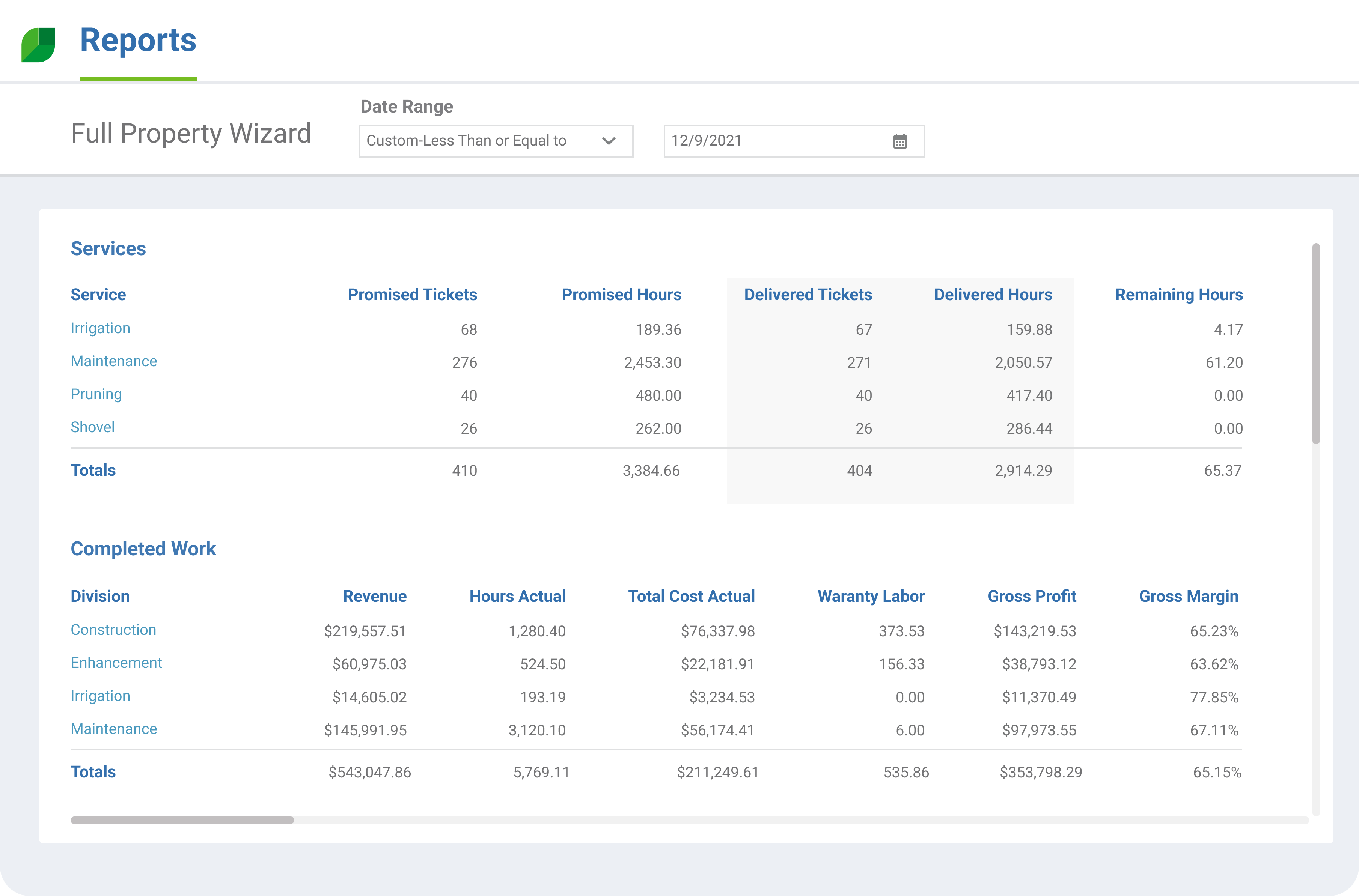
Using these metrics instead of subjective impressions reduces bias, improves fairness, and supports consistent management practices.
Build a stronger team right from the start. Check out this snow removal interview questions guide packed with practical questions to help you identify reliable and hardworking candidates you won’t have to fire.
Over to you!
Letting snow removal workers go is never easy, but with the right approach, it doesn’t have to be stressful.
If you follow the proper procedure, document the employee’s performance, and communicate your intentions clearly, you protect your business from legal action and maintain team morale.
Book a free demo now and discover why Aspire is the best tool for keeping your operations running smoothly during the busy winter season.









 866-727-7473
 Schedule Demo
 390 S Woods Mill Rd #300 Chesterfield, MO 63017


