Table of Contents
Table of Contents
- What is the best time to start a snow removal business?
- Why starting early is important
- How do you prepare your snow-removal business for winter?
- What are the common mistakes when starting a snow removal company?
- How do you keep your business running in the off-season?
- What are the best tools for managing a snow removal business?
- Frequently Asked Questions (FAQs)
In 2025, the U.S. snowplowing industry was valued at $23 billion, growing steadily at 2.6%, according to IBISWorld.
While this is a massive opportunity for business owners, jumping in at the wrong time can lead to missed contracts and wasted resources. Recognizing the right moment to enter the business is fundamental to maximizing your success.
So, when should you start? Is summer a good time, or do you begin in winter?
In this guide, you will learn about:
The best season to start your snow removal business: summer or fall?
How to prepare before winter, e.g., equipment maintenance, team training, contract review, and legal backend.
Common mistakes to avoid.
How to keep your business running when it’s not snowing.
The tools you need for effective business management.
What is the best time to start a snow removal business?
Mark Bradley, CEO of Landscape Management Network, recommends August as a good time to prepare for a snow removal business.
According to Bradley, this month is a time to:
Upsell opportunities for landscaping clients (if available).
Secure new commitments. Offer discounts for early sign-ups.
Launch marketing campaigns to attract new clients.
Ensure your equipment is in optimal working condition before the season begins.
Purchase necessary snowplowing supplies, such as salt, sand, and de-icing products.
Recruit and train staff for the season.
Review and optimize snow removal routes.
Invest in technology to streamline snow removal operations.
Review financials to ensure there’s sufficient cash flow for pre-season expenses.
But if you can start before August, then do. It will give you more time to prepare—market the business well, secure early birds, purchase equipment, and obtain permits before winter demand increases.
Why starting early is important
Launching the business in the summer or fall provides a strong foundation for your operations, giving you enough time to prepare well.
By starting early, you can enjoy these benefits:

1. Hiring and training staff
Most snow removal businesses hire seasonal workers, and recruiting them in winter is difficult.
Starting early lets you find, hire, train, and develop dependable team members before rush orders begin. You will spend less time trying hard to find workers in the middle of the season and more on providing excellent service.
This means less stress and a chance to get the top candidates before your competitors even start looking.
2. Effective marketing
Result-oriented marketing takes time. Launching early gives you enough time to build awareness in the community so your brand is visible well before the snow arrives.
During these months, you can network with property managers, attend local business events, and launch paid ads to increase visibility.
That way, when the first snow falls, your brand is already top-of-mind in your service area.
3. Early client acquisition
Getting a head start before winter gives you an edge with clients.
You can build relationships with homeowners, HOAs, and commercial properties that like to plan ahead in late summer or early fall.
This allows you to land contracts before the winter rush.
4. Equipment testing
Starting early means you have enough time to test your snow removal equipment before the busy season.
Ensure you run the trucks, snowplows, and blowers in advance. This way, your tools are ready for the first snow-removal project.
Plus, it prevents you from incurring additional costs if expensive equipment unexpectedly malfunctions during winter.
5. Enough time for licensing and insurance
Depending on your state, you may need permits, a business driver's license, and liability insurance to operate a snow removal business legally.
Starting in the summer or fall gives you enough time to investigate local regulations, compare insurance coverage, and get everything in order.
It’s a preemptive strategy that helps avoid delays, penalties, or litigation when the demand for snow removal services surges.
How do you prepare your snow-removal business for winter?
Starting in the fall or summer gives you time to plan operations before winter.
In preparation for the launch, here are key steps to ensure your business is compliant with state laws, prepared for snow clearing, and can guarantee customer satisfaction.

1. Secure legal documentation
Research and collect all the necessary business licenses and insurance to avoid legal pitfalls. These could be:
Entity formation (sole proprietorship, partnerships, or LLCs)
Commercial drivers’ licenses
Liability insurance coverage
Snowplow operator licenses
Business name registration
Sales tax permit or Tax ID number
Employee identification number
Check with the authorities in your area to determine the local and state requirements, and begin the process as soon as possible.
For your insurance plan, confirm what it covers—employee injuries, auto accidents, or snow-related losses, and increase coverage if necessary.
This ensures your company is legally covered to avoid penalties.
2. Equipment inspection and maintenance
Already have snow removal equipment? Inspect every item to ensure they’re all ready for intense winter work. Here’s what you can do:
Look for wear and tear on plows, snow blowers, salt spreaders, and other pieces of equipment.
Buy basic tools, fluids, and spare parts for emergencies.
Conduct regular maintenance on powered equipment and vehicles to avoid downtime. This can include fluid checks, oil changes, and occasional repair visits.
Preventive maintenance extends the equipment's lifespan, enabling you to consistently provide quality snow-clearing services.
And if you’re just starting and have no equipment yet, buy new or used equipment to ensure you’re prepared for winter.
You can also consider renting tools if you have a low start-up budget. You just need to find and book early with vendors so the team isn’t scrambling come snow season.
3. Train and prepare your team
Fall is the ideal time to find, hire, and train your staff.
So, create job descriptions and list the openings on platforms like Indeed, LinkedIn, and Glassdoor. Or collaborate with recruiters for your staffing needs (if you can afford it).
Once you’ve hired a team, go over the company’s standard operating procedures so everyone knows what's expected well before winter operations begin.
Here’s what you should focus on:
Safety protocols
Tips for working in cold conditions
How to handle hazardous materials
Operating snow removal equipment
Using management tools effectively
Incentives for outstanding performance
Dealing with different client behaviors
Using operational checklists to beat deadlines
Company policies regarding overtime, weather delays, incidents, etc.
Response plan for different snowstorm scenarios
In addition, you need to define team roles and responsibilities, and cross-train staff to be flexible when demand increases.
4. Get a snow management tool
You’ll need a system to manage and streamline operations when snow starts, as things can get chaotic fast. The phones are ringing, heavy storms are on the horizon, and crews are chasing you for their schedules.
To keep things running smoothly, a snow management app like Aspire can help automate snow-clearing operations ahead of the busy winter season.
It can handle scheduling, billing, customer management, and daily activities from a centralized location so you can focus on growing the business.
Automated procedures ensure you spend less time managing administrative duties and more time providing outstanding customer service.
5. Establish supplier relationships
As a snow removal contractor, having a network of suppliers for salt, deicing chemicals, and equipment parts is crucial to your business’s success.
It helps you get the best deals on supplies and ensure profitability for each project.
So while waiting for the snow season, you need to find and establish relationships with suppliers and equipment shops. This way, you can deliver faster service during emergencies.
To find such relationships, ask other contractors in snow removal communities on Reddit or Facebook.
6. Start marketing early
Build your customer base by advertising your services before competitors do.
Print flyers, go door-to-door, and run paid ads online (social media, Google ads, or programmatic advertising) to build brand awareness for your snow removal business. This way, your company is on people’s minds come winter, giving you an edge against competitors.
Another way to market your services is to offer an early-bird discount to incentivize prospects to enter a pre-season contract. This can offer 10–20% off for prospects interested in seasonal contracts, assuring them of guaranteed services throughout winter and providing predictable revenue for your business.
7. Handle the financial setup
Another step you need to take is to ensure the business's financial setup is ready before things get busy.
Here’s what to do:
Open a business account.
Calculate your entire startup costs and expected revenue to break even.
Define your overhead, so you know how much it costs to keep the lights on daily.
Choose invoicing and payment systems to avoid unnecessary back-and-forths mid-season.
Choose a system to track expenses. Aspire’s job-costing feature can help monitor expenses, making it easy to keep records, file taxes, and define profitable services.
What are the common mistakes when starting a snow removal company?
Starting a snow removal business can be profitable, but if you want to maximize its value, you must avoid:
Starting too late: Begin your preparations early if you want to operate a profitable snow removal service. Otherwise, you risk having a limited client base.
Before the snow begins, you should:
Begin advertising your services
Reach out to potential clients
Ensure equipment is in working order
Stock up on necessary supplies
Hire crews
Organize snowfall crew schedules
Failing to get insurance: Different incidents can happen during winter—slipping, equipment accidents, and property damage. This can mean high expenses for snow removal companies without the right insurance.
To reduce liability and protect your business, acquire comprehensive coverage that includes workers' compensation and general liability for injuries and property damage.
Not making your contracts legally watertight: A clear, legally sound service contract is essential. Poorly drafted or nonexistent contracts can result in disagreements and expensive legal bills.
Ensure that a lawyer reviews all client contracts to ensure essential points are covered.
Skipping safety training: Snow removal businesses that fail to train their employees put them at serious risk. This could lead to accidents and additional expenses to correct mistakes.
Frequent, organized training ensures smooth operations throughout the taxing winter season. It protects workers and lowers potential liabilities.
How do you keep your business running in the off-season?
To maintain revenue and keep the business afloat during the off-season, consider doing the following:
Offering landscaping services: You can diversify into landscaping activities, such as grass maintenance, planting, mulching, and hardscaping installation.
Since clients with lawns are typically your customers in winter, you can secure new contracts to help maintain their landscapes.
Diversifying ensures the company is stable, maximizes asset value, and preserves long-term customer relationships.
Strategic marketing: Update your website and be active on social media to establish a robust online presence. Share information and promote reviews. Use targeted digital marketing to connect with potential customers and offer winter services at early-bird prices. Regular interaction builds client loyalty and positions your company as the industry leader, even during the off-season.
What are the best tools for managing a snow removal business?
Managing a snow removal company requires balancing several moving parts. You’ll need to schedule projects, monitor equipment, optimize routes, and keep everyone on the same page during winter.
The typical approach is to use different tools for each task, creating silos that are difficult to track.
However, with all-in-one software like Aspire, these tasks are much more manageable. It helps you stay organized and offers features to streamline operations.
Here’s how Aspire helps:
Scheduling: Aspire makes it easy to schedule projects the moment they’re won. It offers a calendar-like interface where you can schedule the start and end date of the project, assign it to crew members, and reschedule without leaving the platform.
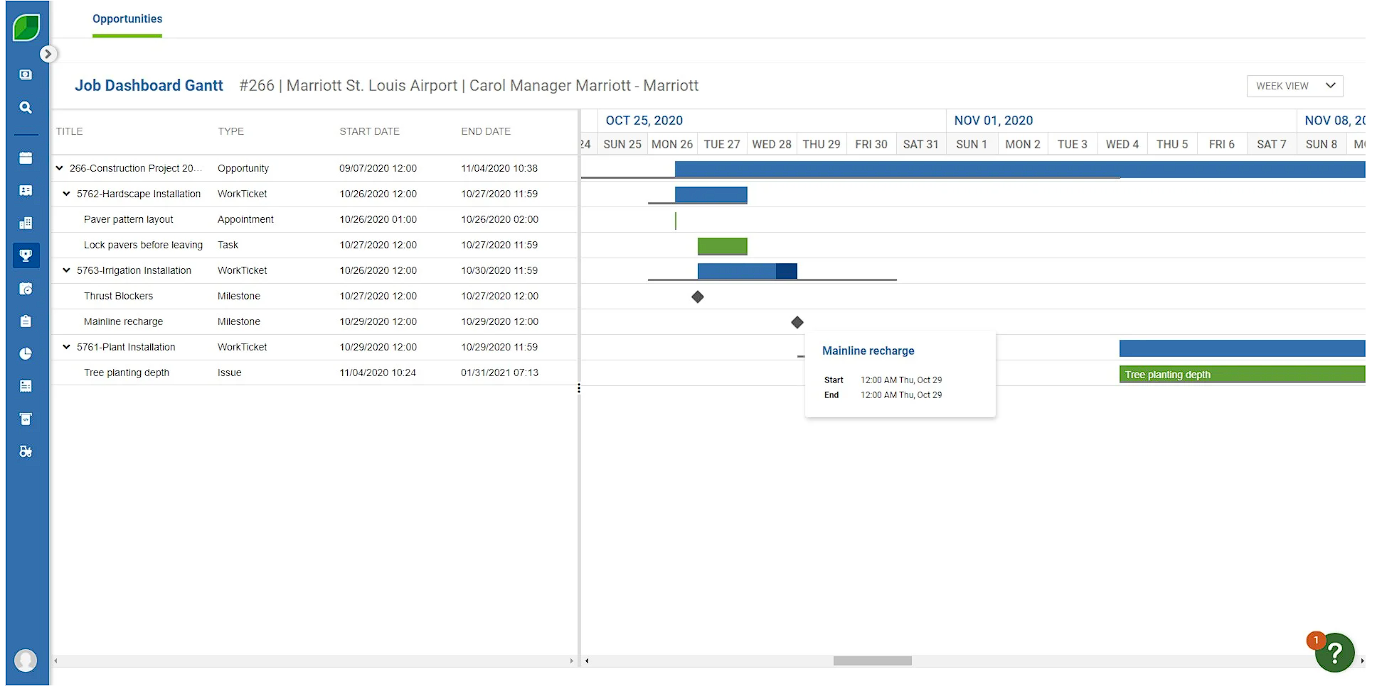
Aspire also allows you to optimize routes to reduce drive time and save costs, include a checklist workers can follow, and add specific notes for a project. Essentially, it ensures everyone can see who’s responsible for what.
Invoicing: Generate invoices to send to clients and get paid directly in Aspire. You can visually track outstanding invoices by color and status, and add notes for each client.
Estimation: Wondering how to bid on a job? Aspire’s estimating feature simplifies the process with customizable templates.
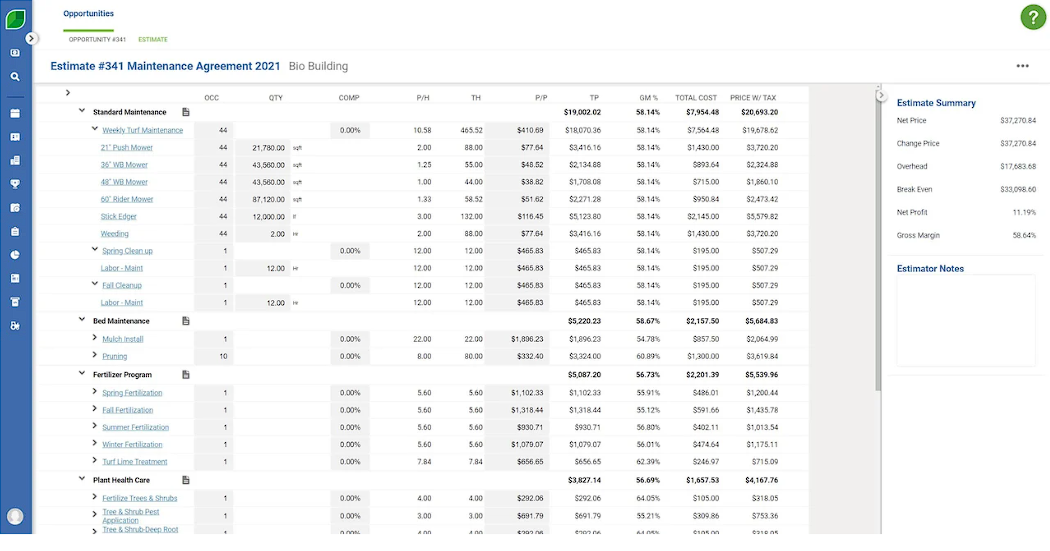
You only need to add the service items from Aspire, and it’ll create professional-looking estimates for clients.
Customers can approve either via email or Aspire’s client portal using a digital signature.
Real-time communication: Aspire enables you to keep clients, field crew, and office staff all on the same page. Field crews can share photos, and clients can report incidents without leaving the app.
Want to see other ways Aspire helps you manage your snow removal business in real time?
Schedule a demo to explore the snow removal management software.
Frequently Asked Questions (FAQs)
Why is timing important when launching a snow removal business?
Strategic timing in snow removal plays a significant role in client acquisition, equipment preparation, and contracts, transforming challenging winters into profitable ones.
Starting early helps you:
Secure contracts before competitors
Build awareness and negotiate without pressure
Get the necessary equipment and maintain it
Plan your finances with contracts lined up
Collect essential licenses and permits to operate
How early should you start advertising snow removal services?
You can begin advertising as early as June or July. This ensures you have sufficient time to build local awareness of your brand as a trusted, go-to business.
When do most customers secure snow removal contracts?
Customers secure contracts well before winter, with commercial and residential clients finalizing agreements in late summer or early fall.
How much does it cost to start a snow removal business?
Starting a snow removal business should cost between $3,000 and $50,000.
This should cover:
Snow plowing equipment
Pickup truck
Equipment maintenance
Fuel
Insurance
Marketing
Snow removal business software
Business license
Should you offer both residential and commercial snow removal services?
Serving both markets can boost your business’s revenue and stability. However, it would require more equipment and staff to be effective.
If you’re just starting, you should focus on one market, residential or commercial, before expanding.










 866-727-7473
 Schedule Demo
 390 S Woods Mill Rd #300 Chesterfield, MO 63017


